
Swahid Smarak Kshetra: A New Chapter in Assam’s Story
Opened on Swahid Diwas, December 10, 2025, the Swahid Smarak Kshetra in Paschim Boragaon is more than Guwahati’s newest monument—it’s Assam’s first unified, state-sanctioned tribute to the sacrifices of the 1979-1985 Assam Movement. This definitive guide goes beyond basic visitor information to explore the profound history this memorial embodies, decode its powerful architectural symbolism, and provide the practical, on-the-ground advice you need for a meaningful visit. Discover why this space of memory and resilience is becoming a must-understand destination for anyone exploring Northeast India’s cultural and political landscape.
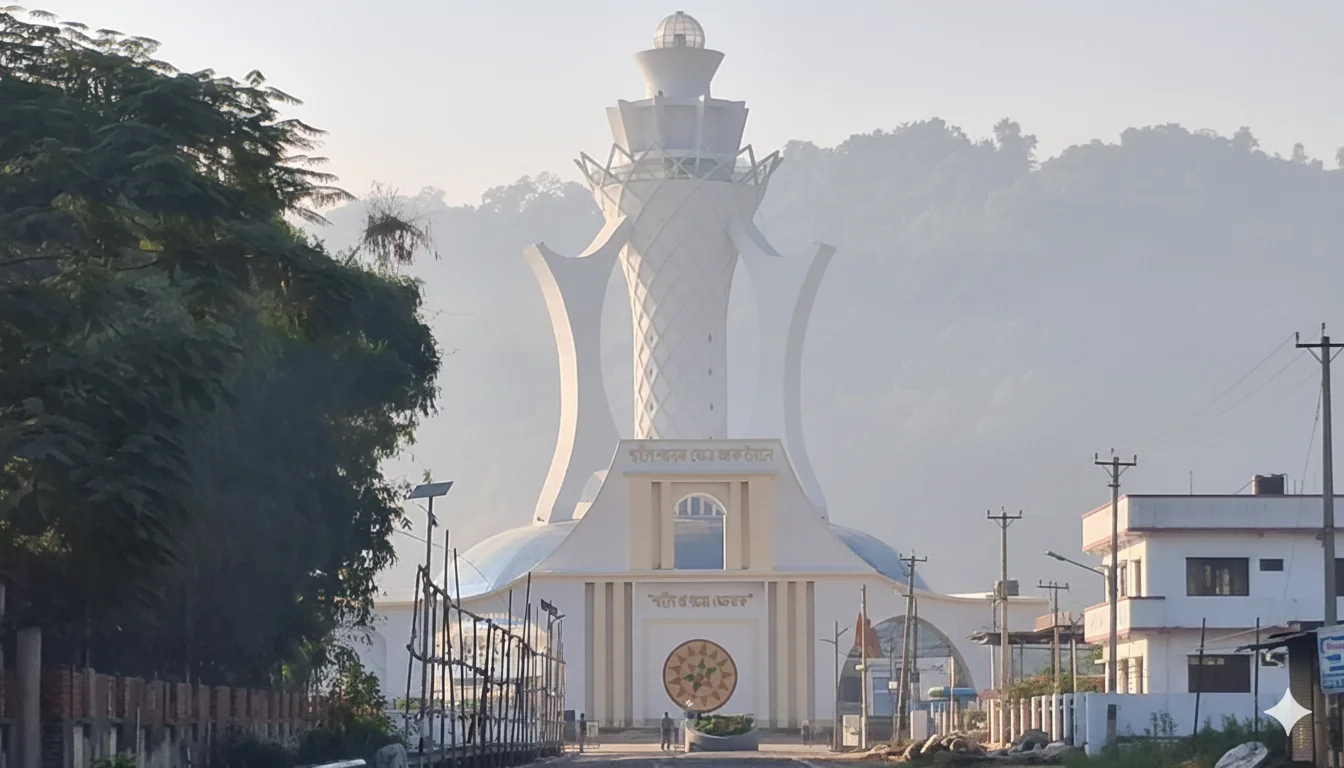
The Grand Approach: A view of the Swahid Smarak Kshetra from approximately 100 meters at the entrance, showcasing the monumental 225-foot tower that honors the 860 martyrs of the Assam Movement. The pathway leads visitors from the everyday into a space of remembrance.
Table of Contents
A Monument Born from Collective Memory
Rising 225 feet against the western skyline of Guwahati, the Swahid Smarak Kshetra is more than a striking addition to the city’s landscape—it is a profound statement in stone, steel, and memory. Opened on December 10, 2025, to mark Swahid Diwas (Martyrs’ Day), this sprawling memorial complex in Paschim Boragaon represents Assam’s first unified, state-sanctioned tribute to the 860 martyrs who sacrificed their lives during the six-year Assam Movement (1979-1985).
Unlike traditional monuments that merely commemorate, the Swahid Smarak Kshetra serves as a living archive of resilience—a space where history is honored, stories are preserved, and a community’s identity is reaffirmed. For travelers seeking to understand the soul of modern Assam, this memorial offers an unparalleled journey into the historical consciousness that shapes the region today. As national attention turns toward this landmark, with high-profile visits underscoring its significance, it has swiftly become a must-visit destination for culturally curious explorers of Northeast India.
The Historical Weight: Understanding the Assam Movement
To fully appreciate the Swahid Smarak Kshetra, one must first understand the historical struggle it memorializes. The Assam Movement (1979-1985) was a defining period in the state’s modern history—a massive, peaceful democratic uprising led primarily by the All Assam Students’ Union (AASU) and the All Assam Gana Sangram Parishad (AAGSP).
The Core Struggle: Identity and Preservation
At its heart, the movement addressed existential concerns about cultural and demographic change. Following decades of migration, many indigenous Assamese felt their linguistic identity, political rights, and land security were under threat. The movement’s central demand was the identification and deportation of illegal migrants, framed as essential to preserving Assamese heritage for future generations.
The struggle culminated in the historic Assam Accord, signed on August 15, 1985, which established a framework for detecting undocumented immigrants and protecting indigenous rights. Clause 6 of the Accord specifically addressed constitutional protections for Assamese identity—a provision that remains central to contemporary political discourse.
The Ultimate Sacrifice: Remembering the Martyrs
During the six-year movement, 860 individuals lost their lives in various incidents of protest and confrontation. These martyrs came from diverse backgrounds—students, farmers, professionals—united by their commitment to their homeland’s future. The very date chosen for the memorial’s inauguration, December 10 (Swahid Diwas), commemorates the death of Khargeswar Talukdar, the Barpeta AASU secretary who became the movement’s first martyr in 1979.
For decades, these sacrifices were remembered through scattered, often neglected local memorials across Assam. The Swahid Smarak Kshetra represents the culmination of a decades-long promise—to centralize this collective memory into a single, dignified space worthy of the sacrifice it honors.
Architectural Grandeur: A Symbolic Walkthrough
Designed as both a place of reverence and a public space for community engagement, the memorial’s architecture tells a story of resilience through its very form. Sprawling across approximately 116 bighas (38 acres) in Paschim Boragaon, every element has been thoughtfully conceived to create a multi-layered experience.
The Central Tower: A Beacon of Resilience
The most striking feature is undoubtedly the 225-foot (68.6-meter) central tower, now a defining element of Guwahati’s skyline. Rather than employing literal representation, the architects chose abstraction—the tower incorporates three stylized human figures that seem to emerge from a single base, symbolizing the collective resolve and unity of the people during the movement.
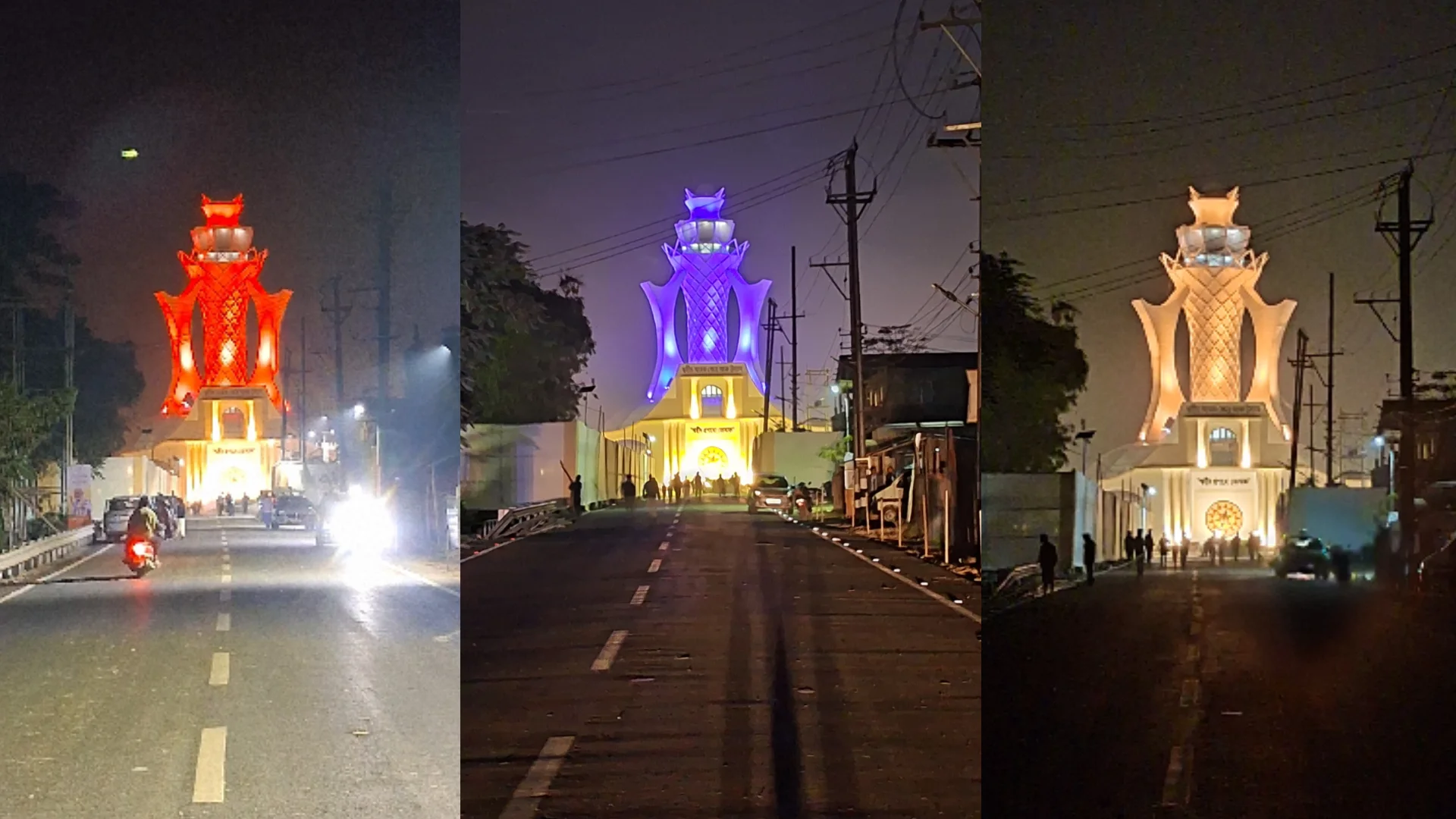
The choice of height is itself symbolic. At nearly 70 meters, the tower serves as a visual anchor visible from multiple approaches to the city, ensuring the memory it represents remains ever-present in the public consciousness. At night, subtle lighting transforms it into a gentle beacon—a reminder that the ideals of the movement continue to illuminate the present.
The Hall of Fame: Faces Behind the Sacrifice
On the ground floor, the Hall of Fame represents one of the memorial’s most emotionally resonant spaces. Designed to eventually house individual statues or busts of all 860 martyrs, this gallery makes a powerful statement about the individuality of sacrifice.
Currently, this space reflects an honest, ongoing historical process. Images have been secured for approximately 150-450 martyrs, with poignant gaps remaining where portraits are yet to be obtained. The government has initiated a dedicated effort to work with families to recover or recreate these images—for approximately 400 martyrs, artists have created sketches based on family descriptions. These empty spaces are not oversights but rather intentional reminders of the work of memory that continues.
As night falls, the memorial undergoes a remarkable transformation. The central tower becomes a dynamic canvas of light, cycling through symbolic colors that add another layer of meaning to its design.
Key Facilities & Symbolic Spaces
| Feature | Specification / Purpose | Symbolic Meaning |
|---|---|---|
| Underground ‘Roll of Honor’ | Contemplative chamber with martyrs’ names engraved | The solemn heart of the memorial; descent represents engaging with historical depth |
| Meditation & Prayer Halls | Spaces for quiet reflection and prayer | Acknowledges the spiritual dimension of remembrance |
| 51.6m Panoramic Viewpoint | Observation deck accessible by elevator | Symbolic ascent; looking toward the future after acknowledging the past |
| 500-Seat Auditorium | Venue for seminars, screenings, cultural events | Space for education and keeping history alive through discourse |
| 1,050-Seat Open-Air Theatre | Amphitheater for performances and gatherings | Community engagement with history through art (future phase) |
| Laser Light & Sound Show | Multimedia narration on water fountain | Bringing history to life through technology |
| Ethnic Food Court | Assamese culinary experience | Nourishing cultural connection through traditional cuisine |
| Cycling Track | 2km track encircling the complex | Integration of wellness and reflection; movement through memory |
The Complete Visitor Experience: A Practical Guide
Swahid Smarak Kshetra Location & How to Reach
The Swahid Smarak Kshetra is located in Paschim Boragaon, along Vigyan Path in western Guwahati. This area is undergoing significant transformation, transitioning from its previous association with the city’s landfill to becoming a new cultural hub.
By Road:
- From the city center (Paltan Bazar), head west via G.S. Road toward Jalukbari
- Take the NH-37 bypass toward Boragaon
- Follow signs for Vigyan Path; the memorial’s tower is visible from approximately 2km away
- Approximate travel time: 30-45 minutes from central Guwahati, depending on traffic
Public Transportation:
- ASTC Bus Routes: Several routes pass near Boragaon, including Route 21 (Kacheri to Khanapara) and Route 23 (Adabari to Khanapara)
- Auto-rickshaws: Readily available from nearby hubs like Jalukbari or Garchuk
- Ride-sharing: Ola and Uber operate reliably in this area
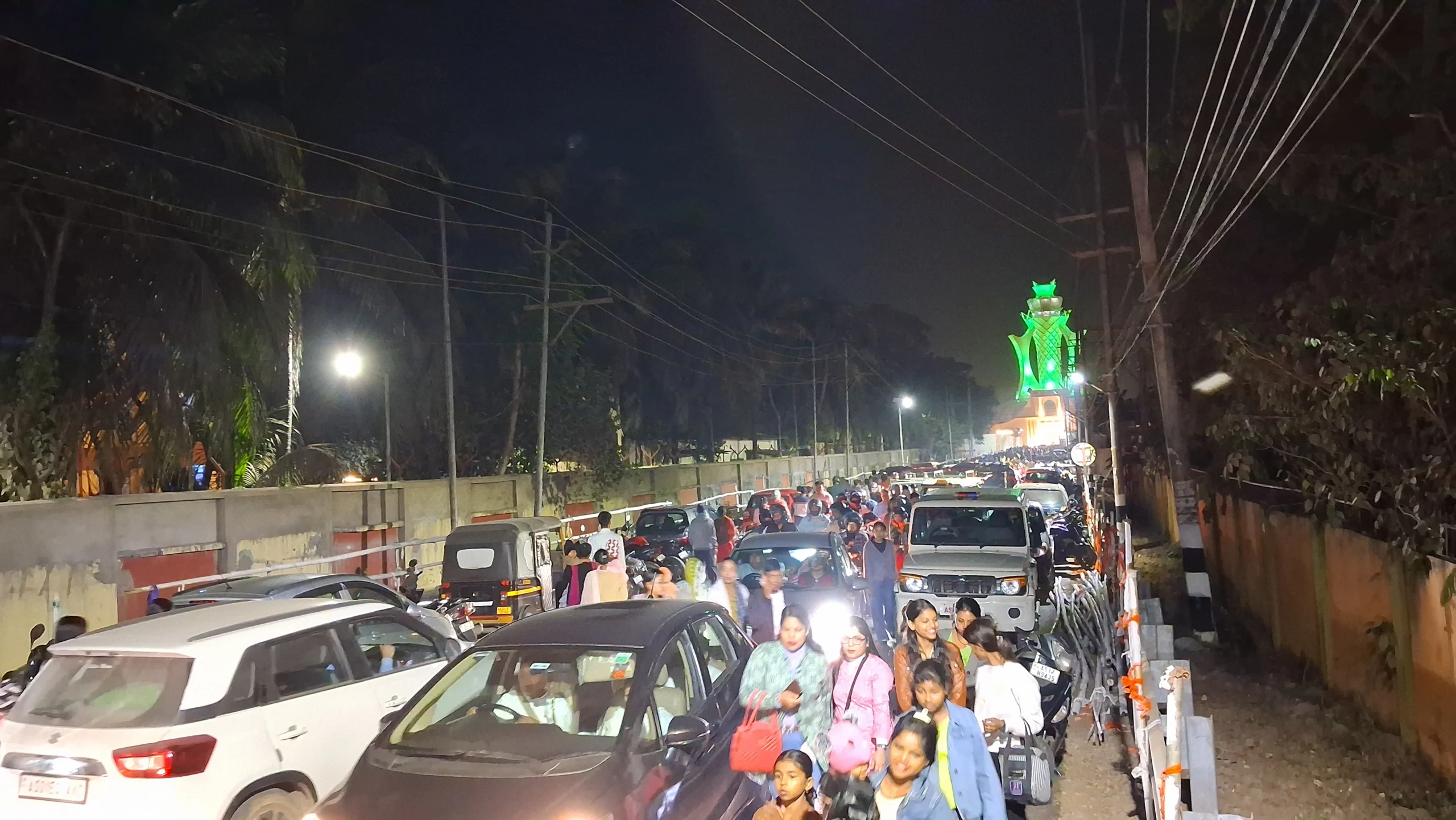
Important Note on Parking at Swahid Smarak Kshetra: While the memorial has designated parking areas, the service lanes of the NH-37 bypass can experience significant congestion, especially on weekends and evenings. For a smoother experience, consider ride-sharing or visiting during non-peak hours (weekday mornings).
Pro Tip Ahead: For a strategic workaround if you must visit during peak hours, see our detailed parking advice in the “Pro Tips” section below.
Ticketing & Operational Hours
The administration has implemented a regulated ticketing system designed to manage visitor flow and ensure the site’s maintenance, rather than as a primary revenue source.
Entry Fees:
- General Visitors: A nominal fee (expected to be under ₹50)
- Special Exemptions: Permanent free entry for families of the martyrs
- Free Entry Days: Open to all without charge on Swahid Diwas (December 10) and other designated days of historical significance
Hours of Operation:
- The memorial is expected to operate daily, with typical public hours from 9:00 AM to 6:00 PM
- The laser light show is scheduled for evening presentations (timings to be confirmed)
- Visitor Advisory: Given the recent inauguration and potential for operational adjustments, it’s recommended to check the latest hours via the Guwahati Metropolitan Development Authority (GMDA) website or local news outlets before planning your visit.
Navigating the Site: Recommended Itinerary
To fully experience the memorial’s narrative flow, consider this suggested pathway:
- Begin at the Entrance Plaza: Take a moment to observe the scale of the complex and the towering monument ahead.
- Descend to the Roll of Honor: Start your visit in the underground chamber. This somber, contemplative space with the names of all 860 martyrs engraved sets the appropriate tone of reverence.
- Ascend to the Hall of Fame: Move to the ground floor gallery. Spend time with the portraits and statues, reading the brief stories where available. Notice the intentionally empty spaces—they speak volumes about the ongoing work of historical recovery.
- Visit the Meditation Hall: Take a few quiet moments for personal reflection after engaging with the stories of sacrifice.
- Rise to the Panoramic Viewpoint: Take the elevator to the 51.6-meter observation deck. The symbolic journey from underground contemplation to elevated vista mirrors the memorial’s message—acknowledging hard history while looking forward with hope.
- Explore the Grounds: Walk the cycling track, visit the ethnic food court for traditional Assamese refreshments, and enjoy the landscaped gardens.
- Conclude with the Laser Show: If visiting in the evening, the multimedia presentation on the water fountain provides a powerful synthesis of the history you’ve engaged with throughout your visit.
What to Expect: The Honest Reality
To ensure visitors have the best possible experience, it’s important to address some current realities transparently:
The “Work-in-Progress” Nature: The Hall of Fame is not yet complete. Rather than detracting from the experience, this offers a unique opportunity to witness historical preservation as it happens—a memorial still becoming what it will be.
Environmental Context: The memorial stands in an area historically associated with Guwahati’s landfill. While significant remediation efforts have reduced the dumping ground by approximately half, some visitors may notice the surrounding area’s ongoing transformation. This context itself tells a story of urban renewal—a former wasteland becoming a place of honor.
Photography Guidelines: While personal photography with smartphones and basic cameras is generally permitted, policies regarding professional equipment (tripods, DSLRs, etc.) may be restrictive. When in doubt, ask staff or focus on experiencing the memorial rather than documenting it.
Accessibility: The memorial has been designed with accessibility in mind, featuring ramps and elevators to key areas including the panoramic viewpoint.
Cultural Significance: More Than a Tourist Attraction
The Swahid Smarak Kshetra represents a sophisticated form of “commemorative urbanism”—the integration of collective memory into the living fabric of the city. It serves multiple interconnected purposes:
A Center for Historical Education
Beyond honoring the past, the memorial is designed as an active educational resource. The auditorium and planned library/archive will host seminars, screenings, and research initiatives, ensuring the history of the Assam Movement is studied and understood by future generations. School visits are being integrated into the memorial’s programming, making it a living classroom for Assam’s youth.
A Space for Cultural Continuity
Through its ethnic food court, performance spaces, and community events, the memorial facilitates the expression and preservation of Assamese culture. It becomes a place where traditional arts, cuisine, and crafts are not merely displayed but actively practiced and shared—a celebration of what the martyrs sought to protect.
A Symbol in Contemporary Discourse
The memorial’s inauguration and subsequent prominence occur at a significant political moment. References to the “spirit of the Assam Accord” and ongoing discussions about protecting indigenous land rights through new legislation connect this space of memory directly to current policy debates. For visitors, this offers insight into how historical narratives continue to shape present-day Assam.
Pro Tips for Your Visit & Nearby Attractions
Making the Most of Your Experience at Swahid Smarak Kshetra
- Timing Is Everything: Visit on a weekday morning for smaller crowds and a more contemplative atmosphere. The light is also excellent for photography at this time.
- Dress Appropriately: While there’s no strict dress code, this is a place of reverence. Modest, respectful attire is appropriate.
- Plan for Duration: Allocate at least 3-4 hours to experience the memorial properly without rushing. If you plan to attend the laser show, you’ll need to stay into the evening.
- Combine with Learning: Before your visit, consider reading about the Assam Movement to better appreciate the context. The book “Assam: A Burning Question” by Hiren Gohain or documentary films on the period can provide valuable background.
- Engage with Staff: The personnel at the memorial are knowledgeable about its history and symbolism. Don’t hesitate to ask respectful questions about what you’re seeing.
- Digital Detox Consideration: While photography is permitted, consider dedicating portions of your visit to being fully present without screens—particularly in the Roll of Honor and Meditation Hall.
Pro Tip: Beat the Weekend Parking Crunch
Planning a weekend or evening visit when the memorial is most popular? Parking lanes on the NH-37 bypass can become completely clogged, turning your exit into a frustrating ordeal. Here’s a local workaround: Arrive a little earlier than planned and look for secure, legal parking at least 500 meters before you reach the main gate. The short, pleasant walk will save you from the bottleneck later and make your departure smooth and stress-free. It’s a small trade-off for a much better overall experience.
Nearby Attractions for a Complete Guwahati Experience
The Swahid Smarak’s location in western Guwahati places it conveniently near several other significant attractions:
For Spiritual Exploration:
- Kamakhya Temple: Just 6km east, this is one of Hinduism’s most revered Shakti Peethas. The temple’s spiritual energy and architectural beauty offer a contrasting yet complementary experience to the historical memorial. Don’t miss the unique Kamakhya Temple GuidePedia before planning the visit.
- Bhimashankar Dham: Approximately 8km away, this newly developed religious complex near Jalukbari is gaining prominence as a spiritual and cultural center worth exploring for its architectural grandeur and serene atmosphere.
For Cultural & Scientific Enrichment:
- Assam State Museum: Located 10km away in the heart of Guwahati, this repository of Assamese history, art, and anthropology provides deeper context to the region’s rich heritage. Its collections help visitors understand the cultural landscape that the Assam Movement sought to preserve.
- Guwahati Planetarium: About 9km from the memorial, this center for astronomical education offers a different perspective—literally looking beyond earthly concerns to the cosmos—providing a thoughtful counterpoint to the historical focus of the Smarak.
- Kalakshetra: Situated 12km away, this cultural institution dedicated to preserving and promoting the traditional arts of Northeast India offers living demonstrations of the very cultural heritage that defines Assamese identity.
Natural Escape:
- Deepor Beel: A freshwater wetland and bird sanctuary just 3km from the memorial, offering excellent opportunities for birdwatching and peaceful contemplation in nature.
Suggested Itineraries
Half-Day Cultural Immersion:
- Morning: Swahid Smarak Kshetra (3 hours)
- Afternoon: Kamakhya Temple (2 hours)
- Evening: Traditional Assamese dinner at a local restaurant
Full-Day History & Heritage Tour:
- Morning: Swahid Smarak Kshetra
- Midday: Lunch at the memorial’s ethnic food court
- Afternoon: Assam State Museum
- Late Afternoon: Guwahati Planetarium
- Evening: Sunset cruise on the Brahmaputra (seasonal)
A Living Memorial for Future Generations
The Swahid Smarak Kshetra represents a new chapter in how Assam remembers its past and envisions its future. More than a static monument, it is designed as a dynamic space of engagement—where history is honored not through passive observation but through active remembrance, education, and cultural practice.
As national attention increasingly turns to this landmark, its significance continues to evolve. What remains constant is its core purpose: to ensure that the sacrifice of 860 individuals is never forgotten, and that their commitment to preserving Assamese identity continues to inspire present and future generations.
For the thoughtful traveler, a visit offers more than sightseeing—it provides a meaningful window into the historical consciousness of a region, an opportunity to engage with stories of resilience that continue to shape the Northeast’s cultural and political landscape. In the silent spaces between the towering monument and the individual portraits, in the journey from underground remembrance to panoramic vista, visitors will find not just a memorial to the past, but a profound meditation on memory, identity, and hope.
Visitor Information Summary:
- Location: Paschim Boragaon, Vigyan Path, Guwahati, Assam
- Inaugurated: December 10, 2025 (Swahid Diwas)
- Key Feature: 225-foot central tower honoring 860 martyrs of Assam Movement
- Best Time to Visit: Weekday mornings for smaller crowds
- Suggested Duration: 3-4 hours minimum
- Nearby Attractions: Kamakhya Temple (6km), Bhimashankar Dham (8km), Assam State Museum (10km)
With increasing national attention following high-profile visits, this memorial is becoming a must-see destination for understanding contemporary Assam. Check back for updates on special events and visiting dignitaries that may enhance your experience.
Swahid Smarak Kshetra: Essential Visitor FAQs
What are the Swahid Smarak Kshetra opening hours?
As of its inauguration, the memorial is open daily, 9 AM to 8 PM. For the most current hours and any unexpected closures, we recommend checking the latest updates from the Guwahati Metropolitan Development Authority (GMDA) before your visit.
Is there an entry fee for Swahid Smarak Kshetra?
Yes, a nominal entry fee is charged for general visitors as a tool for site regulation. Entry is permanently free for families of the martyrs and for all visitors on Swahid Diwas (December 10) and other designated days.
What is the best time to visit Swahid Smarak Kshetra to avoid crowds?
Weekday mornings typically offer the smallest crowds and a more contemplative atmosphere. Weekends, especially evenings around the laser show time, are the busiest.
Where can I park my car?
Designated parking is available but can fill up quickly, especially on weekends. Pro Tip: For a stress-free exit, consider parking legally at least 500 meters before the main gate and walking the short distance.
How much time should I plan for my visit?
We recommend allocating at least 3-4 hours to experience the memorial’s various sections—the Hall of Fame, panoramic viewpoint, and grounds—without rushing.
Is photography allowed inside?
Personal photography with mobile phones and small cameras is generally permitted for non-commercial use. Restrictions may apply to professional equipment like tripods and DSLRs.
What are the key things to see?
Don’t miss the 225-ft central tower, the Hall of Fame, the underground Roll of Honor, the panoramic viewpoint (accessible by lift), and the evening laser & sound show.