
More Than a Place to Stay
You don’t visit this place. You step into a way of life.
When I first came to Nasiriba two years ago, I thought I was just stopping for lunch. A Rabha household in Satargaon, near Guwahati, serving a simple meal before we headed back to the city.
Something about that afternoon stayed with me.
I never imagined a Rabha village experience near Guwahati could feel so far from everything. Now I’m writing about it – because some places deserve to be known, but not shouted about.
If you’re planning to visit or stay here, start with this complete guide:
👉 Nasiriba Food & Homestay – Best Village Stay Near Guwahati
Not just the food, though that was unforgettable. It was the quiet rhythm of the house. The loom in the corner. The small patch of land behind the kitchen. The way the family moved through their day without hurry, without performance.
This year, I returned. Not as a traveler collecting experiences, but as someone who wanted to understand what makes this place more than a homestay.
Thinking of experiencing this yourself?
👉 Here’s a simple plan: Weekend Trip from Guwahati – 2-Day Itinerary
Who Are the Rabha?
Nasiriba is not just a homestay—it is a Rabha household.
The Rabha are one of the indigenous communities of Assam, traditionally connected to farming, weaving, and forest life. Their way of living is shaped by what the land offers and what the seasons demand.
As Chandan, whose family runs Nasiriba, once shared with me, these practices are not something they “preserve” for visitors, they are simply part of everyday life.
There are no demonstrations here. You don’t watch culture.
You sit beside it and experience…
The Loom: Where Stories Are Woven
The first sound I heard when I walked into the house this time was not a greeting.
It was the loom.
Tak-tak. Tak-tak.
A steady rhythm that seemed to hold the afternoon together.
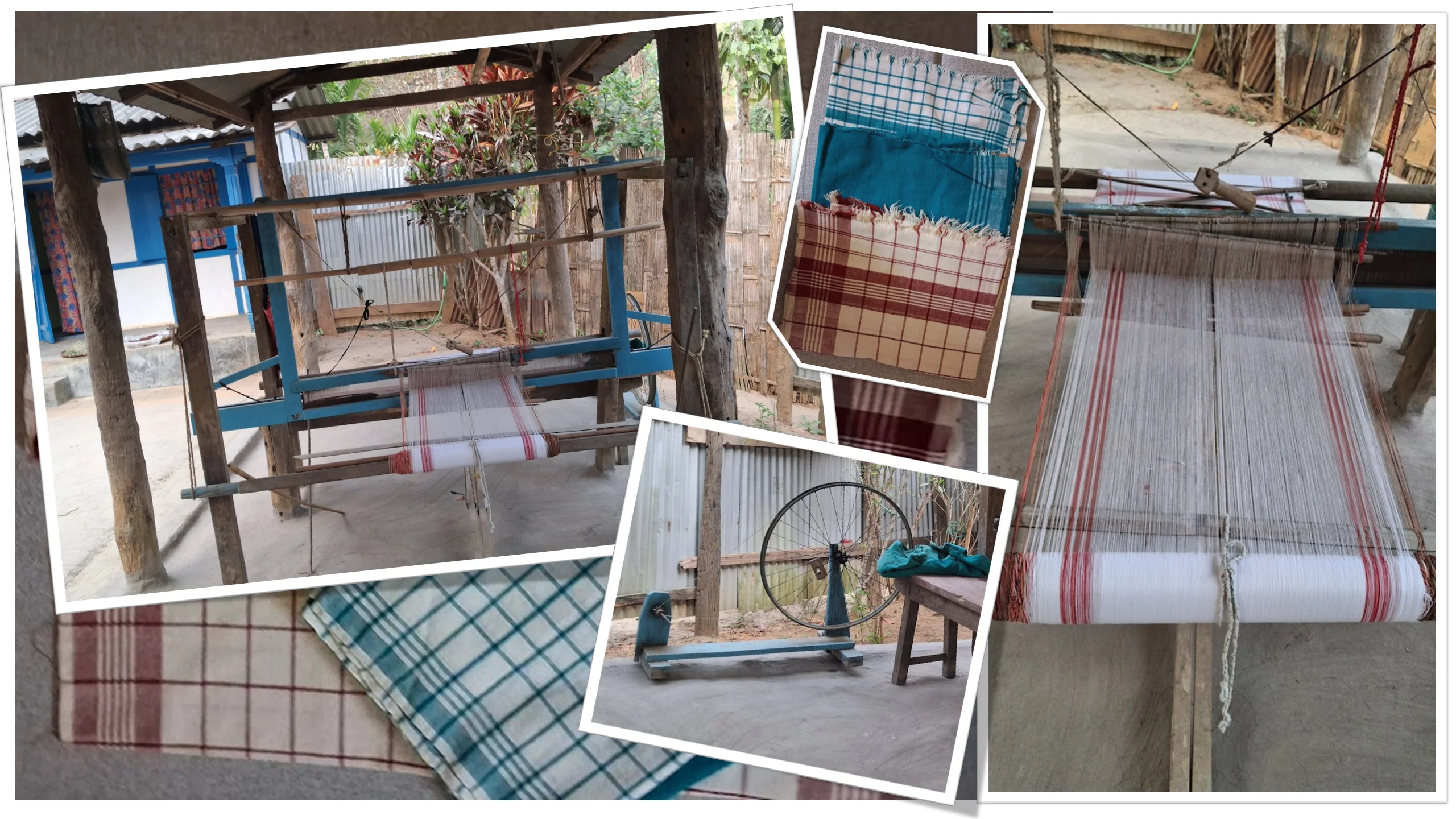
Chandan’s mother sat at her handloom, a simple wooden frame, threads stretched across, her hands moving with quiet precision while her feet pressed the pedals below.
Handloom weaving here is not just a skill of the hands. It is a coordination of the entire body, hands and feet working together in rhythm. Something that takes years to learn, and a lifetime to perfect.
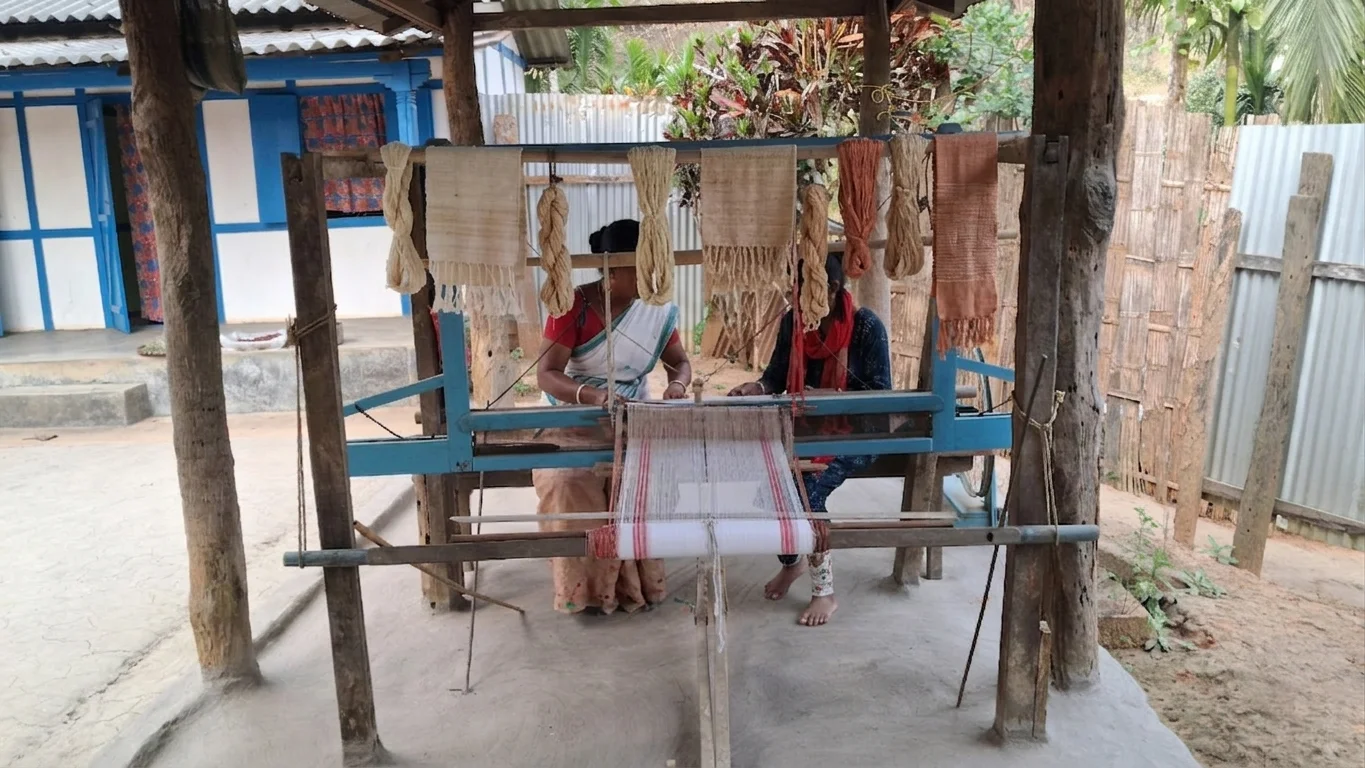
My wife sat beside her, curious.
“You try,” she said.
What followed was laughter. The rhythm broke again and again. Hands moved, feet hesitated. Chandan’s mother smiled, adjusted, demonstrated again.
A few uneven lines appeared. Small, imperfect—but real.
“You should try,” my wife told me later, smiling.
I didn’t. But I understood what she meant.
Sitting at that loom, even briefly, connects you to something deeper – the patience, the skill, and the quiet dignity of creating something by hand.
If you visit, you can also buy a handwoven Assamese gamocha directly from the family (around ₹300). Not as a souvenir, but as something made in front of you, by the same hands that welcomed you.
The Farm: Small Land, Deep Intelligence
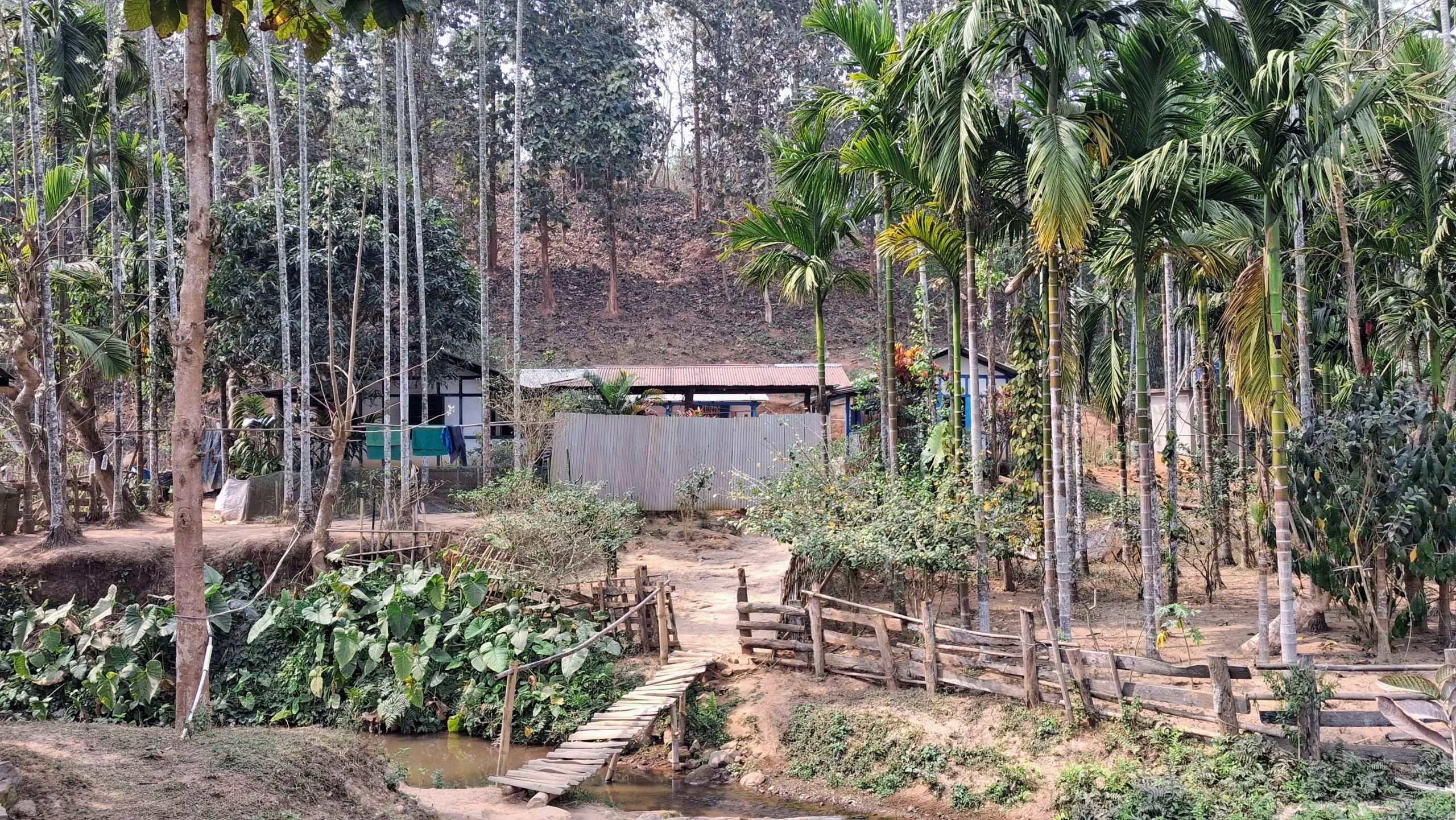
Step behind the house, and you’ll see it, a small patch of land that holds more life than many farms ten times its size.
King chilli plants. Lemons. Dheki shaak growing near the edges. Jalpai trees. Chalta (elephant apple). Betel nut trees rising above. Bee hives tucked quietly in corners. Chickens scratching the soil. Goats resting in the shade.
Nothing here looks “designed.”
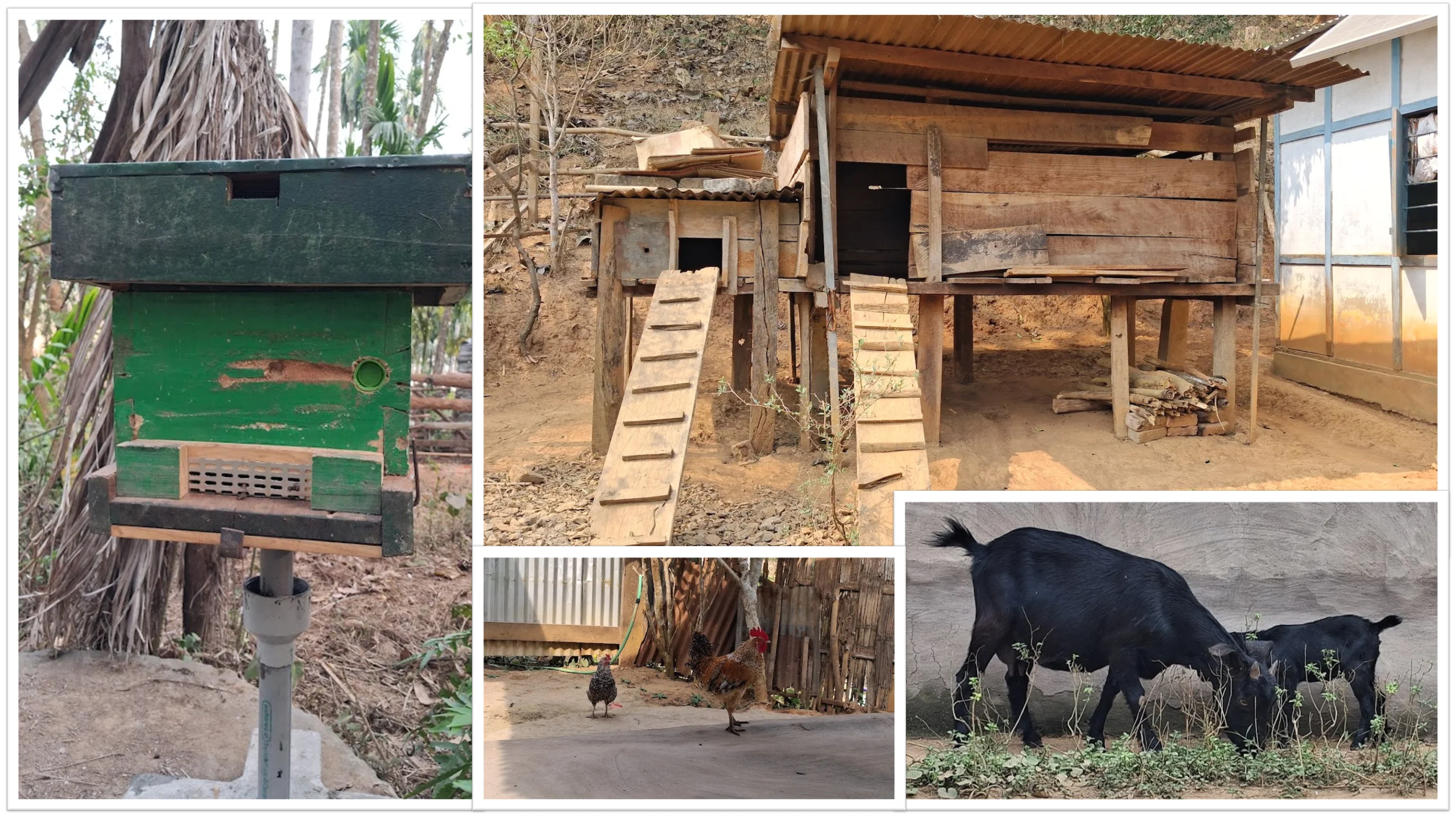
And yet, everything works.
The arrangement feels natural, but it is deeply intelligent, each element in its place, each space serving a purpose. A living system that feeds the household.
This is not a farm you visit.
This is a farm you live with.
Much of what you eat here comes from within sight of the kitchen, making it a true farm-to-plate experience rooted in traditional Assamese village life near Guwahati.
Want to see how this translates into actual meals?
👉 Traditional Assamese Village Food at Nasiriba
Living with Elephants: Adaptation, Not Fear
Satargaon lies within the Garbhanga Forest range, part of an active elephant corridor.
Here, elephants are not distant wildlife. They are part of the landscape.
On the road to the house, we saw fresh elephant dung. My son crouched beside it like a detective. “Big elephant,” he said. (You can watch it here also)
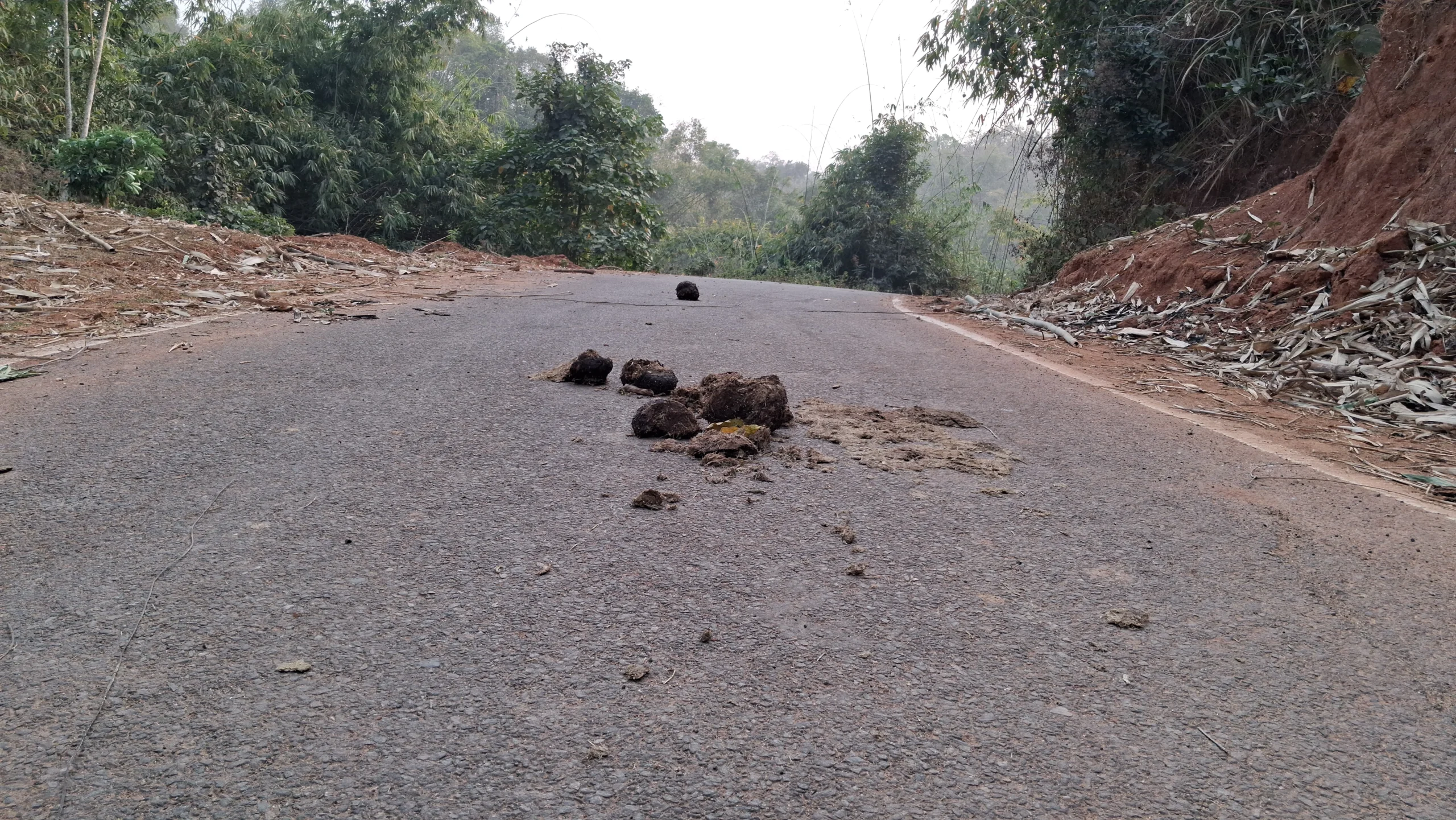
Later, my wife noticed something unusual: empty plastic bottles hanging along the fence.
When she asked, Chandan’s mother explained.
In some areas, the Forest Department installs electric deterrents to prevent elephants from entering fields. Here, without access to such systems, the family has adapted, hanging bottles in a similar pattern, hoping elephants recognize the visual signal and stay away.
No technology. No budget.
Just observation, memory, and quiet ingenuity.
This is what coexistence looks like – not fear, not conflict, but adaptation.
The Rhythm of a Day
There is no clock at Nasiriba.
But there is rhythm.
Morning begins with roosters and tea. The day unfolds slowly, conversations on the verandah, small tasks, movement without urgency.
Afternoons carry the sound of the loom, children playing, and animals moving freely through the courtyard.
Evening brings the chulha to life, the smell of wood smoke, dinner being prepared, light fading through betel nut trees.
And then, silence.
No traffic. No notifications. No background noise.
Just wind, leaves, and the quiet presence of being.
In that stillness, something shifts.
You don’t feel like you’ve escaped life.
You feel like you’ve returned to it.
If you want to see how all of this feels during a real visit:
👉 We Went Back to a Village Near Guwahati – Full Story
What You Can Experience as a Visitor
At Nasiriba, nothing is packaged. You don’t “book experiences.”
You become part of the day.
Here’s what that can look like:
- Sit at the handloom and try weaving (you’ll likely fail, and enjoy it)
- Walk through the farm and learn about local plants and ingredients
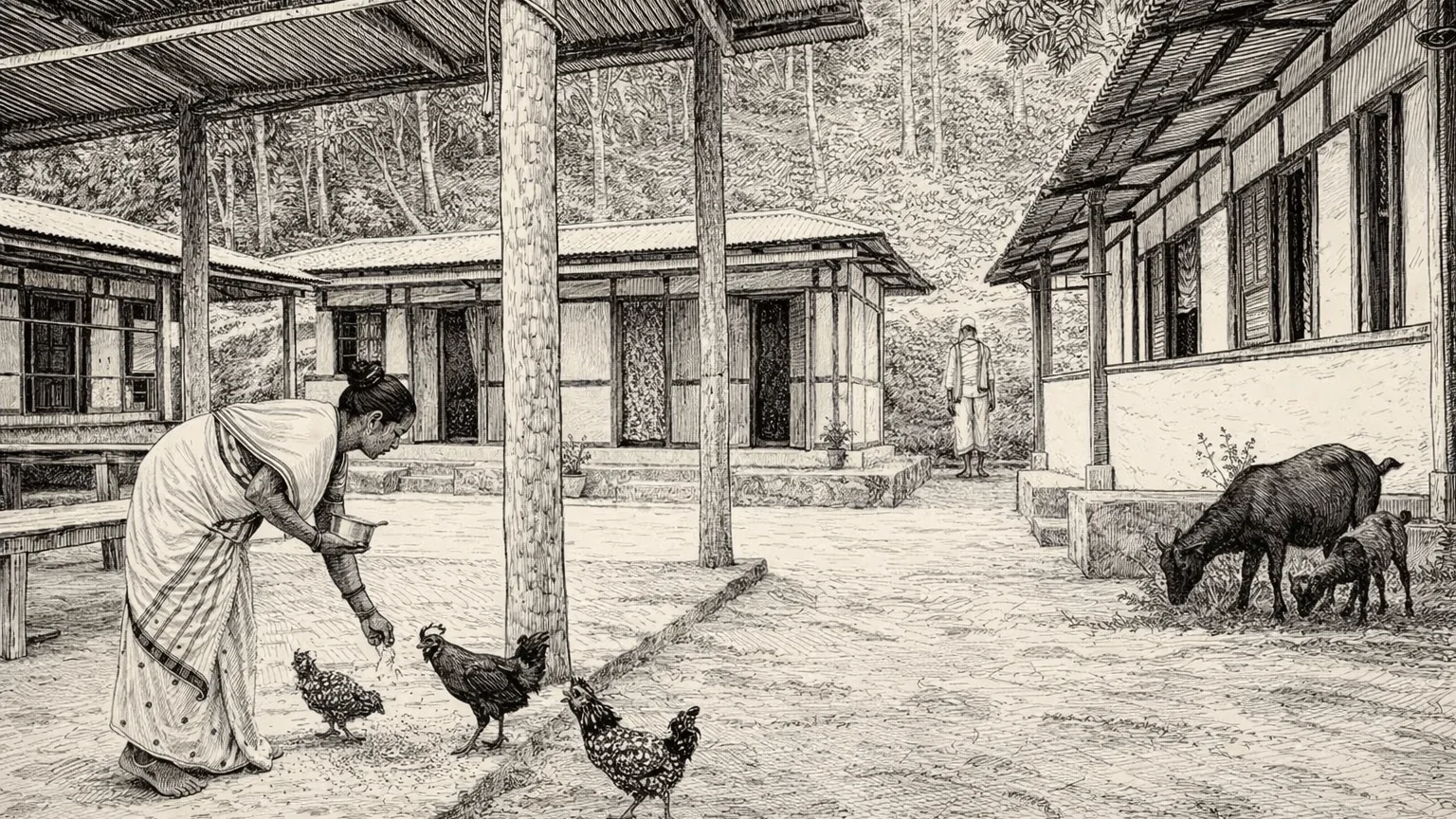
- Feed chickens and goats, especially if you’re traveling with children
- Ask about elephants, the forest, and the stories of living here
- Or simply sit, observe, and do nothing
There is no checklist.
Presence is enough.
Why Buying a Gamocha Here Matters
You’ll see gamochas around the house – drying, folded, or still on the loom.
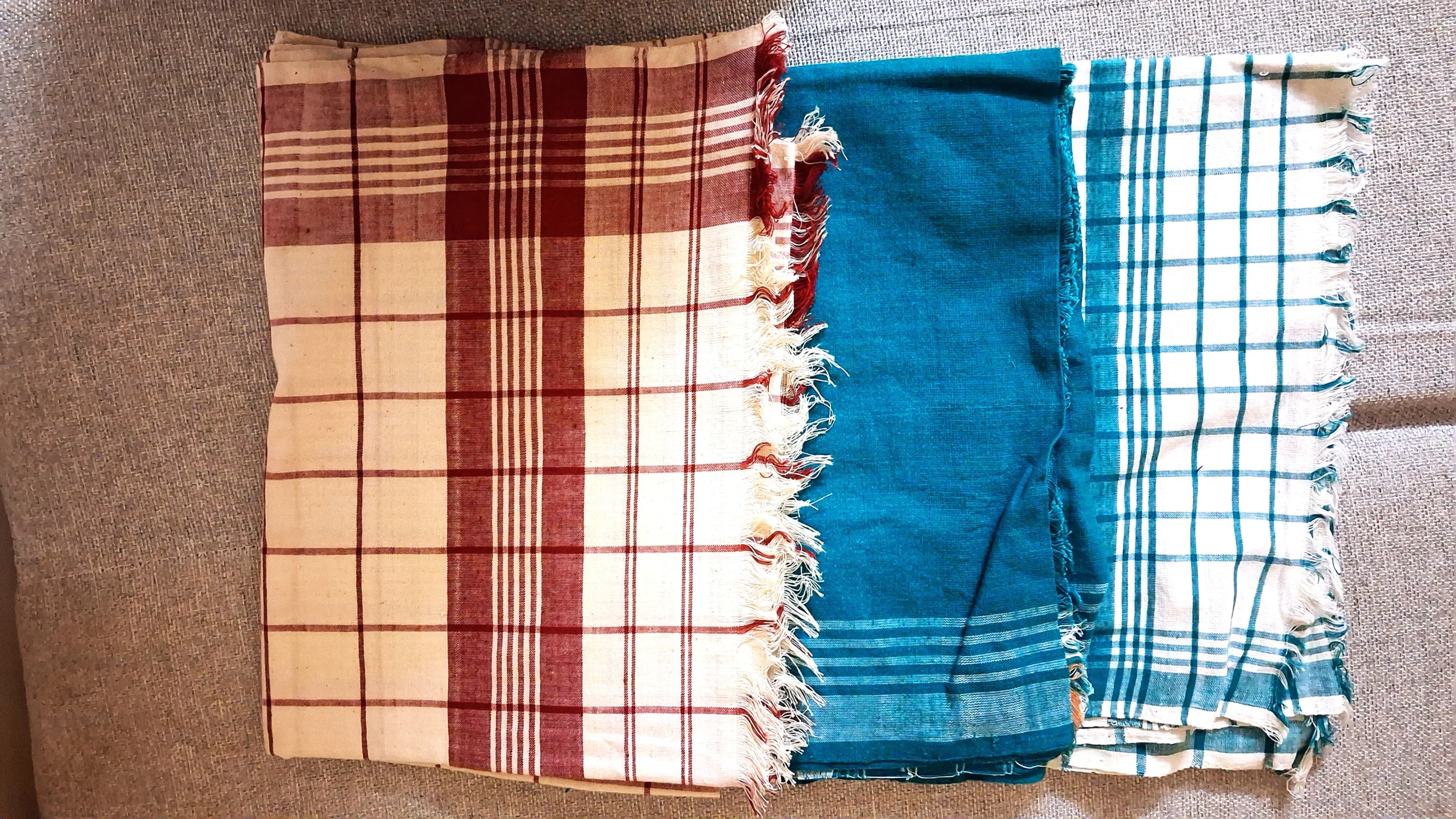
In Assam, a gamocha is more than cloth. It represents respect, identity, and everyday life.
Here, each one is handwoven by Chandan’s mother.
She once sold them in local markets. But rising costs made that difficult. Now, guests buy directly.
At around ₹300, it’s accessible.
But what you take home is not a product.
It’s a piece of time, skill, and continuity, woven quietly in a village near Guwahati.
A Culture That Isn’t Performed
There are no staged experiences here.
No cultural shows. No performances.
What you see is simply life.
The loom runs because there is work to do. The farm grows because it feeds the family. The bottles hang because elephants pass through.
Nothing is curated.
And that is what makes it real.
A Way of Life, Shared
When I first came here, I thought I was stopping for a meal.
I didn’t know I was stepping into something deeper.
Now, when I think of Nasiriba, I don’t think of it as a homestay.
I think of the loom. The farm. The silence. The small, thoughtful adaptations that make life possible here.
Nasiriba means “a warm invitation” in the Rabha language.
It fits.
Planning Your Visit
If this way of life resonates with you, it’s something you need to experience in person.
Start here:
👉 Nasiriba Food & Homestay – Complete Stay & Booking Guide
👉 Weekend Trip from Guwahati – Full 2-Day Plan
Because this is not just a place you visit.
It’s a way of life you briefly become part of.