
What Traditional Assamese Village Food Near Guwahati Feels Like
The Banana Sheath Moment
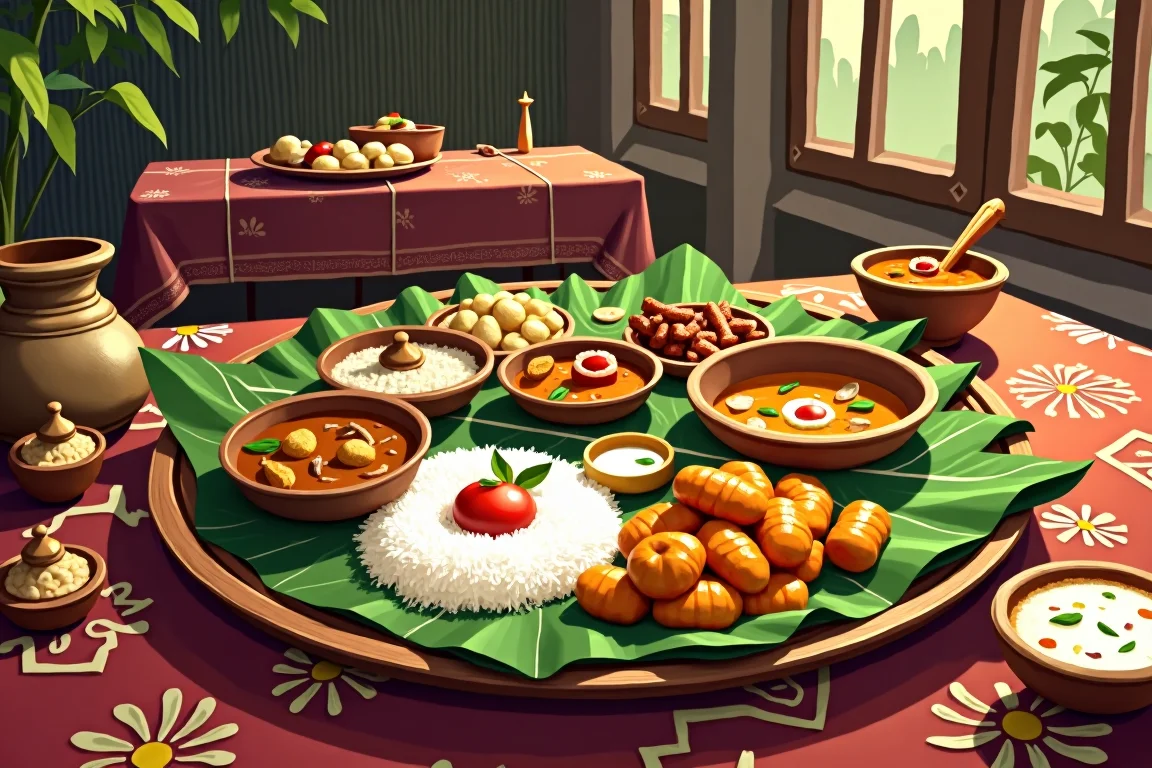
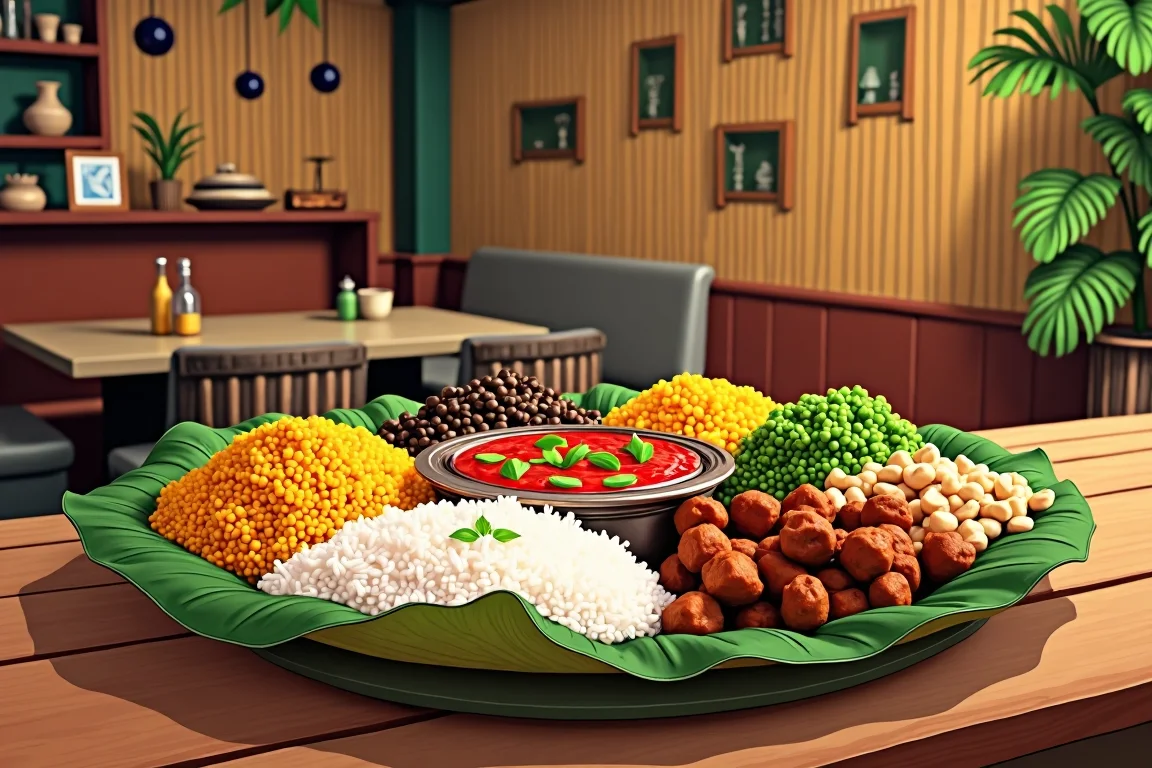
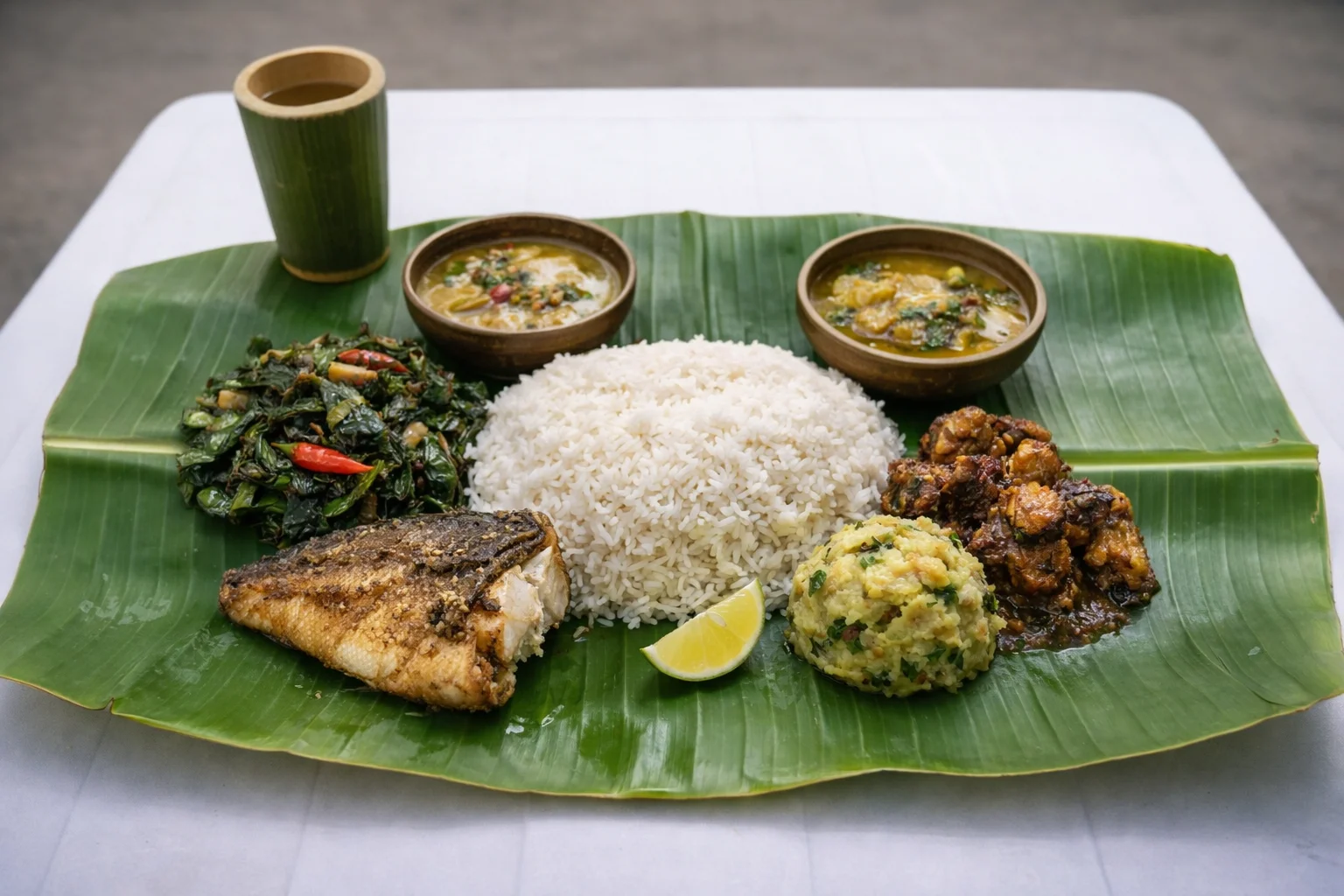
The meal arrived on a banana sheath.
Not because someone was trying to create a “rustic plating” moment for Instagram—but because that’s how food has been served in this Rabha household for generations.
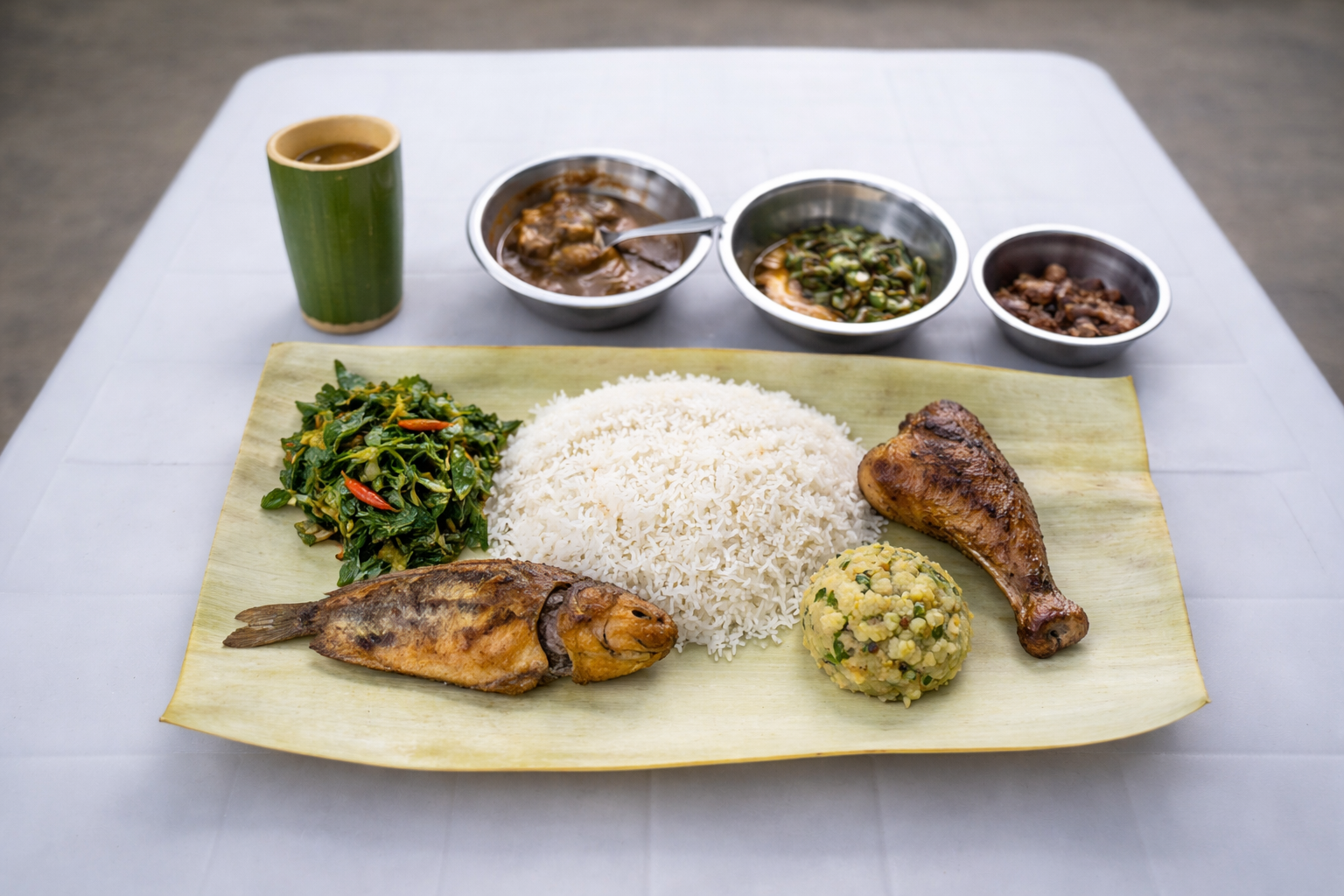
Two years ago, on my first visit to Nasiriba, I sat cross-legged on a mat outside the kitchen. A large, glossy banana leaf was placed before me. Then came a mound of steaming rice, a ladle of dal, a piece of fish, a swirl of pitika, and a small green chilli that I would later learn was the legendary bhut jolokia.
No plates. No cutlery. Just hands.
That was my first real experience of traditional Assamese village food near Guwahati.
I didn’t know it then, but that meal would quietly pull me back.
If you want to understand the place behind this food, start here:
👉 Nasiriba Food & Homestay – Complete Guide to This Village Stay Near Guwahati
No Menu, No Rush: The Real Philosophy
There is no printed menu at Nasiriba. There never will be.
What you eat depends on:
- What’s growing in the homestead that morning
- What fish is available locally
- What the family feels like cooking
Chandan’s mother decides as she walks through the garden, dheki shaak ready to be picked, jalpai ripening, hens laying eggs.
This is not restaurant food.
This is traditional Assamese village food, shaped by season, soil, and instinct.
You don’t order here.
You arrive….and you’re fed.
Thinking of experiencing this yourself?
👉 Here’s how to plan it: Weekend Trip from Guwahati – 2-Day Itinerary
What Traditional Assamese Village Food Looks Like Here
Every meal is different. But the structure, the soul, remains the same.
A. Meats (Rabha Specialties)
Meat here is not routine. It is intentional.
Duck with Papaya (Haah Lau Manso)
Slow-cooked duck with raw papaya that tenderises the meat while absorbing the rich gravy. Deep, earthy, unforgettable.
Local Chicken (Kukura Manso / Kukura Bhaji)
Free-range, small, intensely flavorful. Cooked as curry or slow-roasted over fire.
Pork (Gahari)
Often paired with bamboo shoot or papaya. Rich, slightly smoky, deeply satisfying.
Pigeon (Paro)
Rare. Personal. Usually served when you’re no longer just a guest.
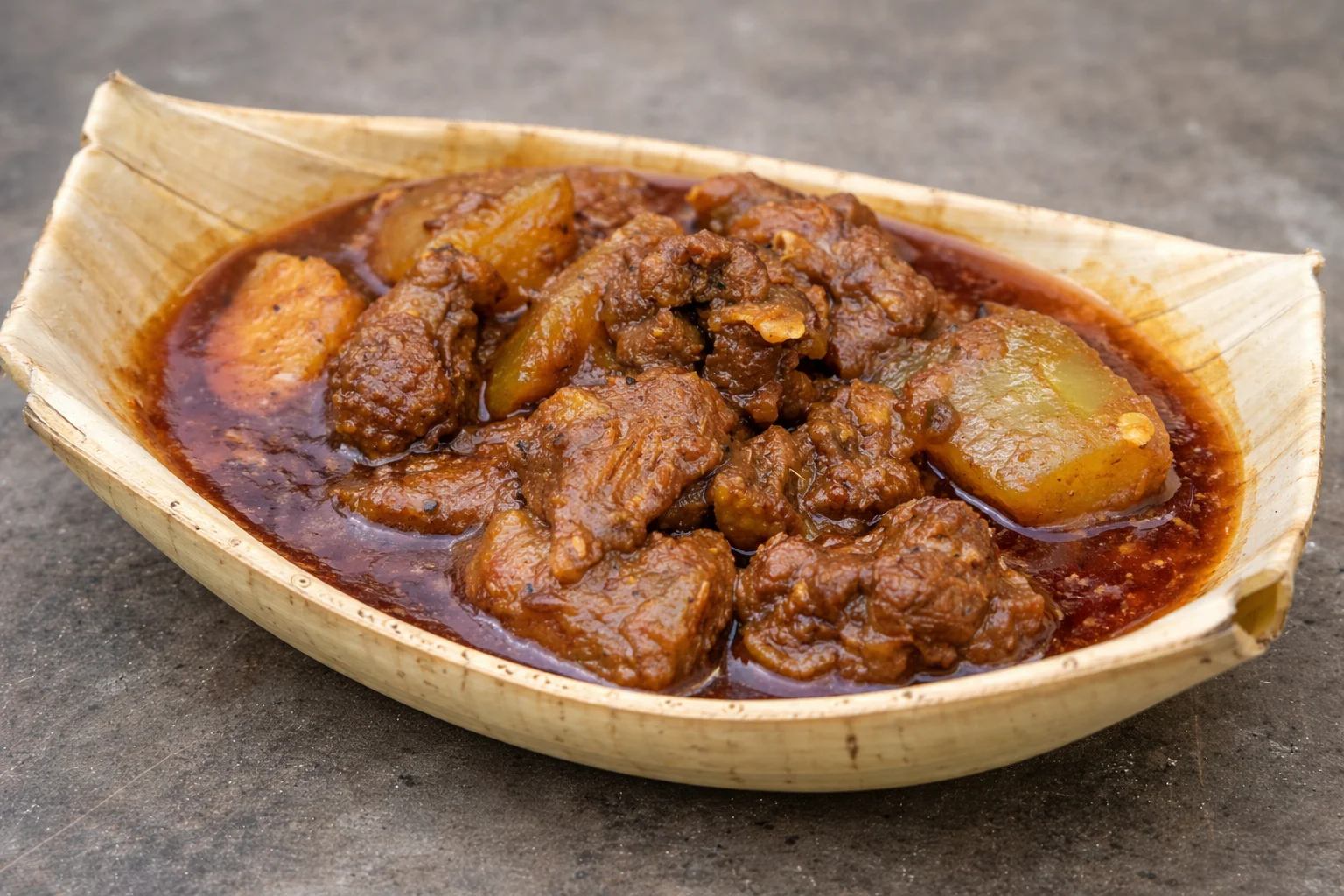
B. Fish (Maach)
Always fresh. Always contextual.
Tenga (Sour Curry)
Light, tangy broth made with tomato or thekera – meant to be sipped.
Fried Fish
Minimal spices. Maximum freshness.
There is no “fish of the day” board.
There is only what is right that day.
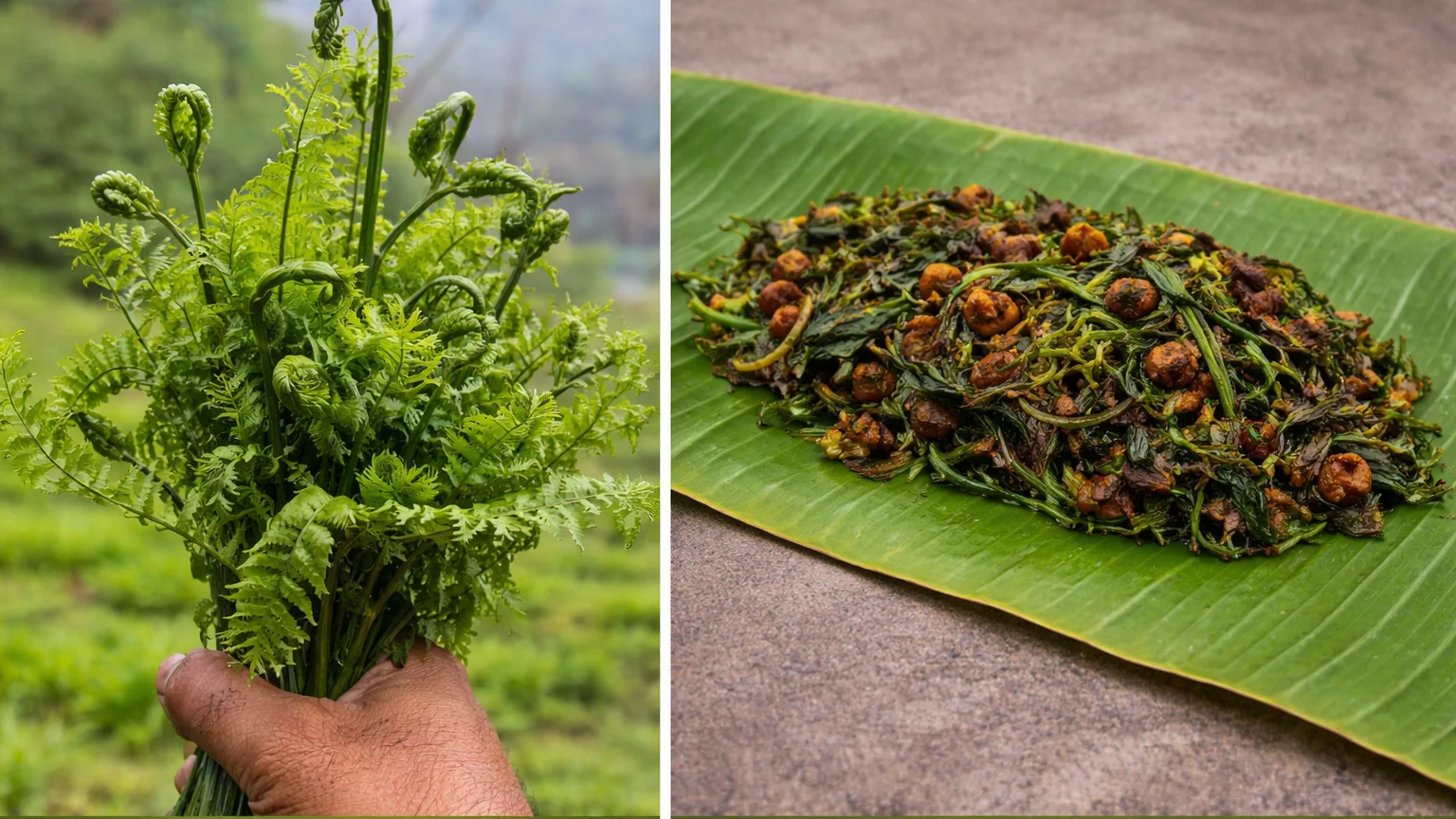
C. Shaak (The Real Heart of the Meal)
This is where the cuisine becomes alive.
At Nasiriba, shaak is not one dish – it’s a living category.
Depending on season, you may get:
- Dheki Shaak (fiddlehead fern)
- Lai Xaak (mustard greens)
- Pui Xaak (Malabar spinach)
- Kolmou Xaak (water spinach)
- Masundori (wild greens)
Cooked as fry, curry, or dal.
No repetition. No fixed recipe. Just rhythm.
This connection between food and land is part of a larger way of life here:
👉 Inside a Rabha Village – Culture, Farming & Daily Life
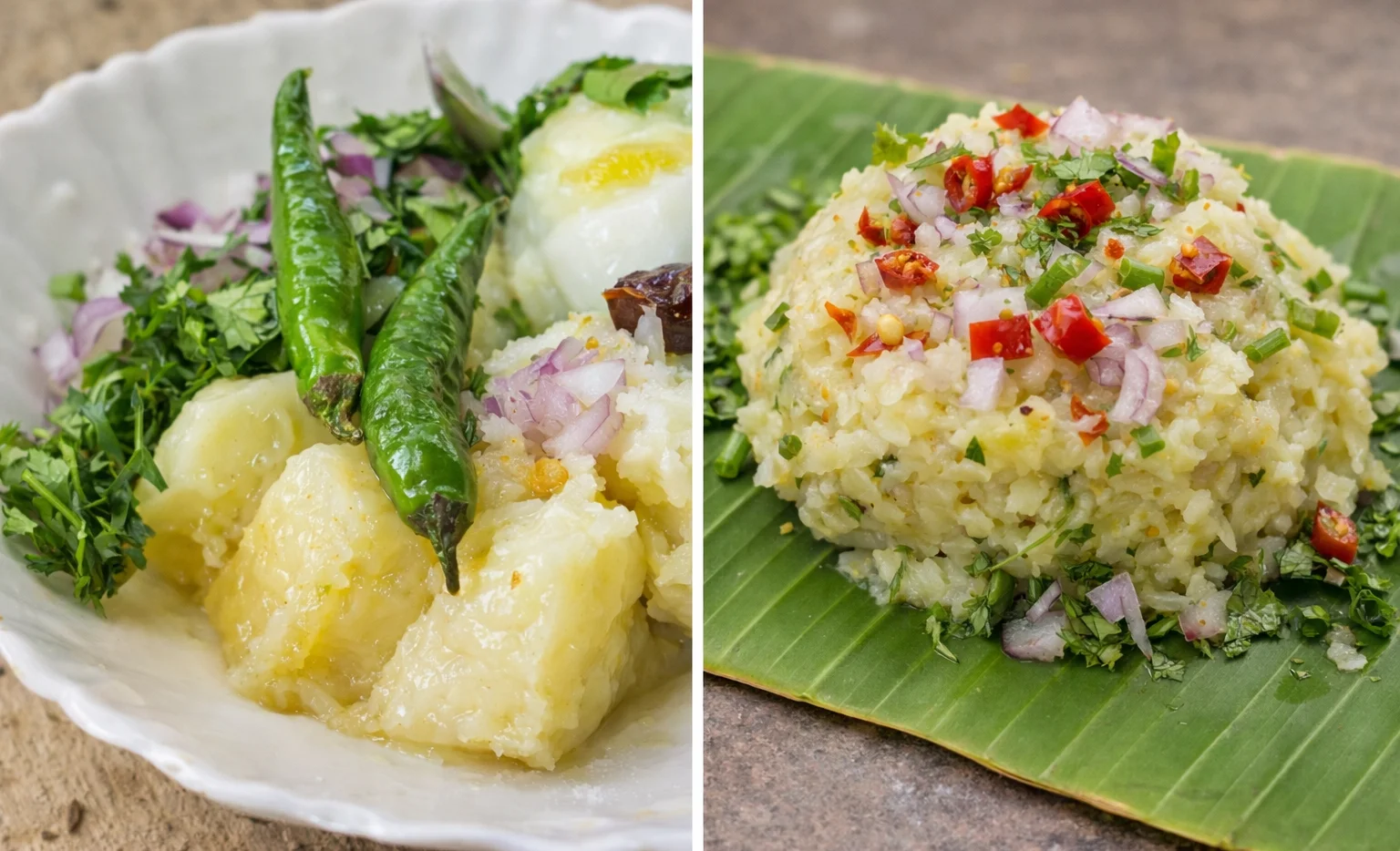
D. Pitika (Mashed Soul Food)
You cannot understand Assamese food without pitika.
Aloo Pitika
Mashed potato, mustard oil, onion, chilli – simple, perfect.
Bilahi Pitika
Roasted tomato mash. Smoky. Tangy. Addictive.
These are not side dishes.
They are emotional anchors.
E. Dal & Chutneys
Dal
Plain or with shaak – light, grounding.
Chutneys
Mint, tomato, or something spicier.
And then…
Bhut Jolokia
Not decoration. Not a challenge. Just… presence.
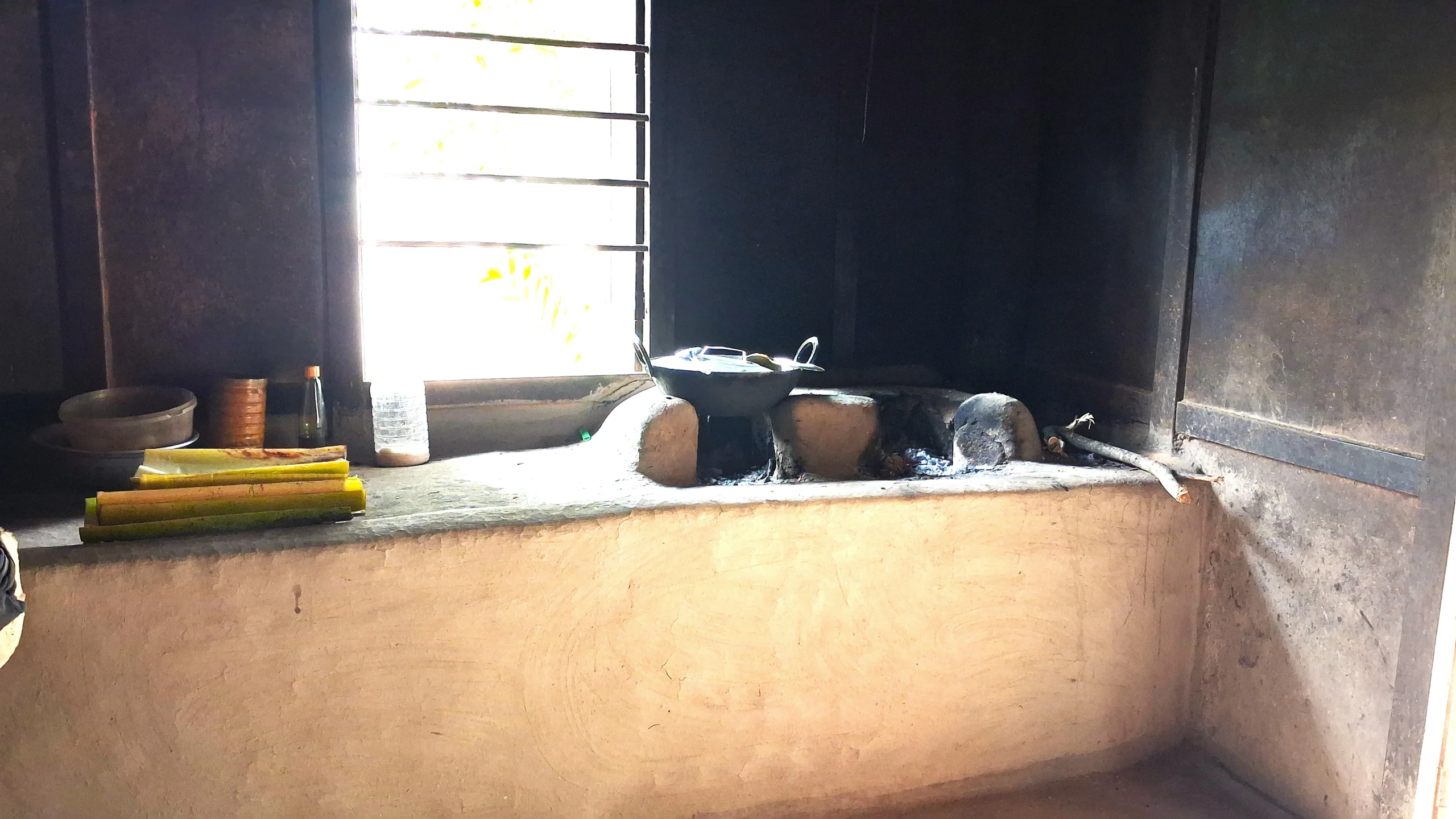
Cooking: Fire, Time, and Patience
Much of the cooking happens on a chulha – a traditional wood-fired stove.
Slow heat. Deep flavour. Subtle smokiness.
Gas is used, but the soul lives in the fire.
5. Sunga Cooking: Fire, Bamboo, and Smoke
There is one moment at Nasiriba that feels almost cinematic.
A green bamboo tube sits quietly over an open fire. No lid, no stirring, no visible flame touching the food inside—just slow heat, time, and patience doing their work.
Inside that bamboo, something extraordinary is happening.
This is Sunga cooking. Watch how Sunga cooking actually happens.
Meat: chicken, duck, or pork – is marinated with simple, local ingredients. Then it is carefully stuffed into hollow green bamboo and placed over charcoal or firewood. The bamboo seals in moisture while slowly infusing the meat with a subtle, earthy aroma.
When it’s ready, the tube is open.
Steam rises. The smell hits first – smoky, rich, unmistakably different.
And then the dish is poured out.
What you taste is not just meat. It’s fire, bamboo, and time combined.
The Sunga Gahori (bamboo pork) I saw being opened was unlike any pork dish I’ve had before. Tender, slightly smoky, deeply flavoured without being heavy.
This is not something you will find in a restaurant menu.
This is traditional cooking, preserved because it still belongs here.
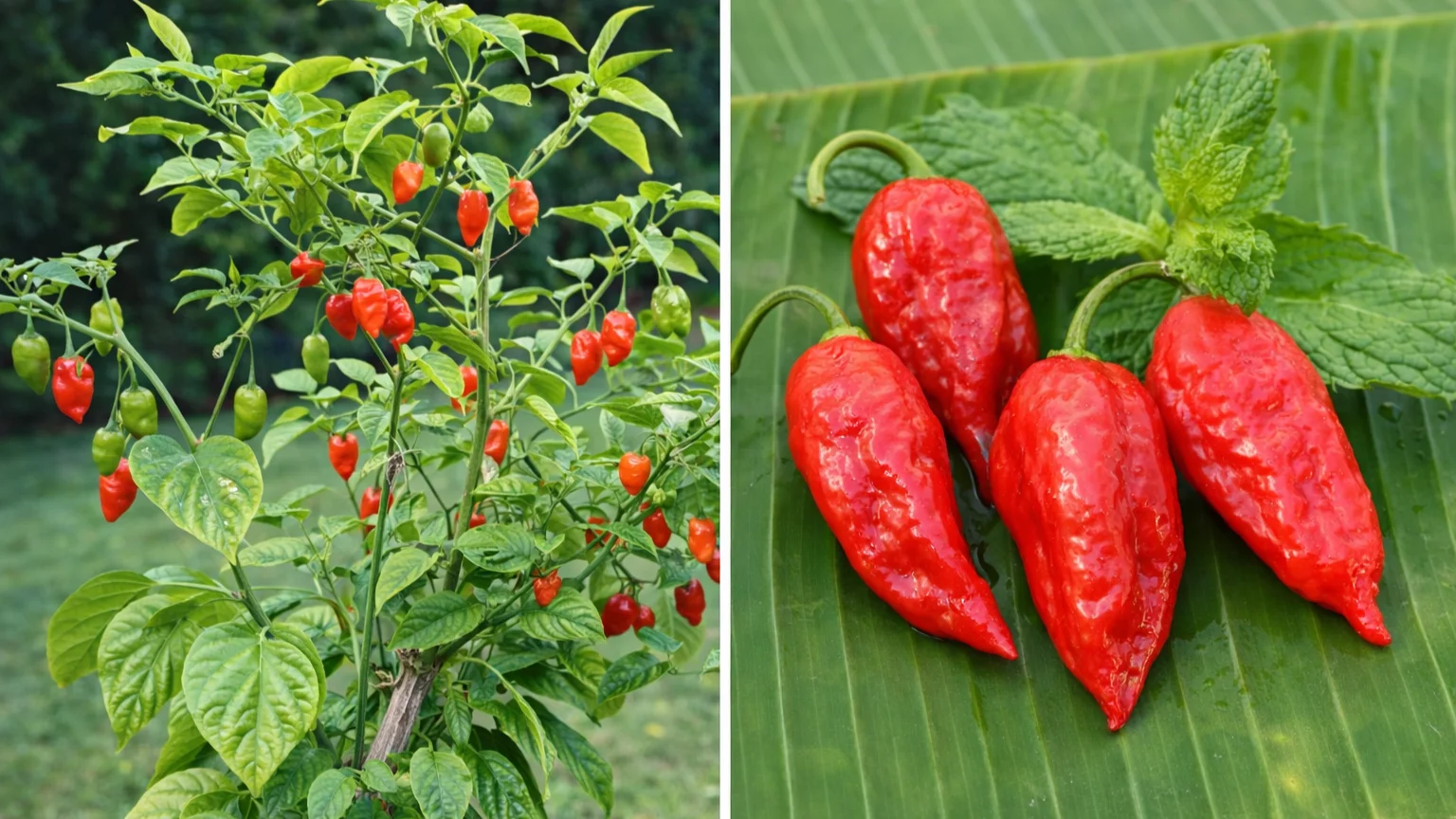
The King Chilli
Bhut jolokia is respected here.
A small piece sits quietly on your banana sheath.
You decide when and how much.
It doesn’t demand attention.
It earns it.
You Can Shape Your Meal
This is where Nasiriba becomes accessible to everyone.
- Vegetarian? Easily arranged
- Specific dish? Request in advance
- Only food visit? Absolutely welcome
It’s flexible! Because it’s a home, not a system.
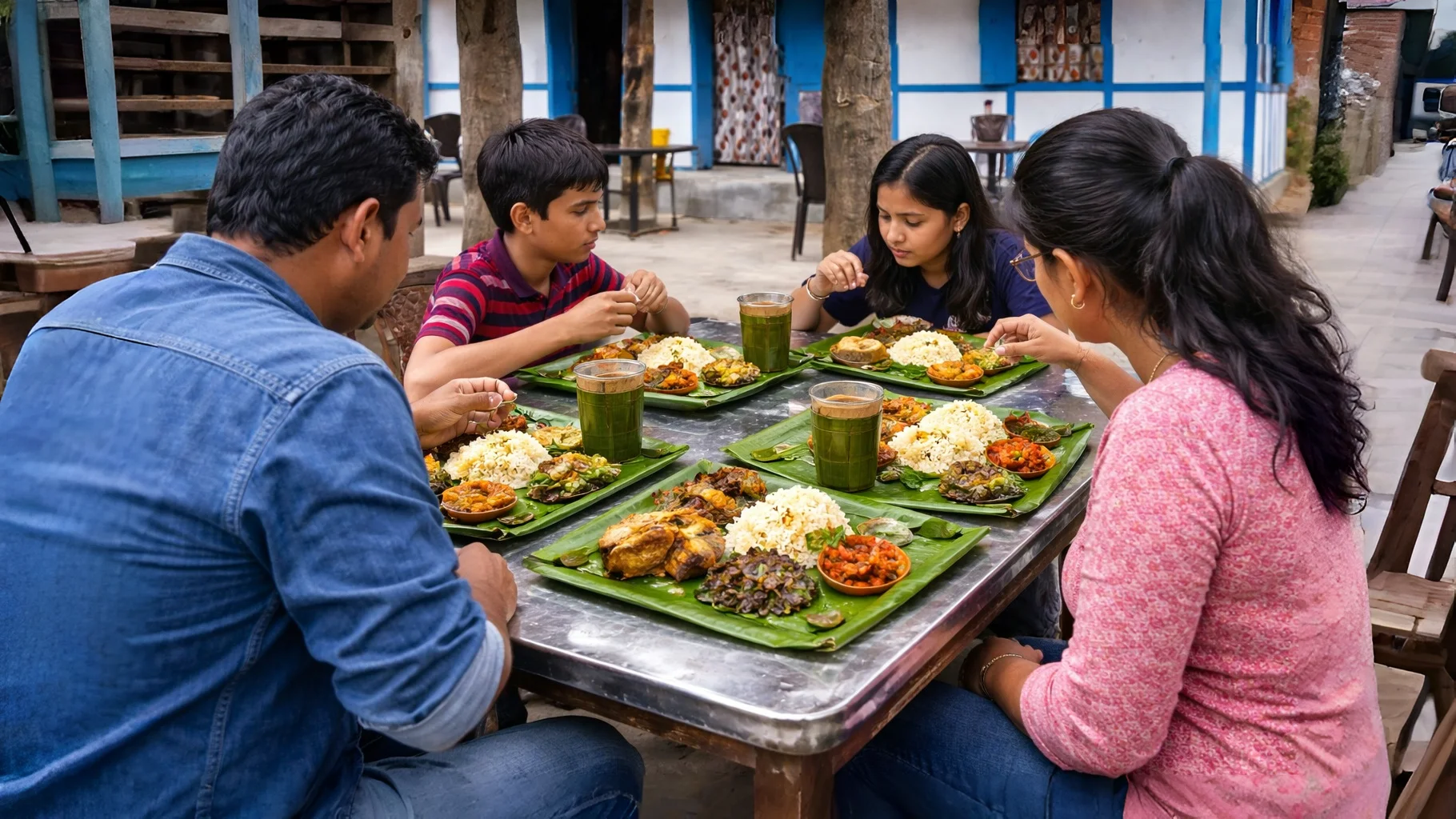
The Eating Experience
Sometimes outside.
Sometimes near the kitchen.
Children eat first.
Adults follow.
Food is shared, not served.
At some point, you stop noticing dishes…
and start feeling something else entirely.
If you want to see how this experience feels in real life: 👉 We Went Back to a Village Near Guwahati – Full Story
Why This Feels Different from a Restaurant
No menu.
No plating.
No performance.
Just:
- Food grown nearby
- Cooked with memory
- Served with intent
This is not curated authenticity.
This is life.
Food at Nasiriba: What You Should Know
- Cost: ₹500–700 per person
- Booking: Required (1–2 days prior)
- Timing: Lunch (1–2 PM), Dinner (7:30–8:30 PM)
- Vegetarian: Fully possible
👉 For stay details, booking, and full experience: Nasiriba Food & Homestay – The Best Village Stay Near Guwahati
A Meal That Stays with You
I have eaten at fine restaurants in Guwahati.
But the meals I remember most…
are the ones eaten on banana sheaths at Nasiriba in Satargaon.
With chickens in the background.
With smoke in the air.
With people who feed you like you belong.
This isn’t just food.
This is traditional Assamese village food near Guwahati–
lived, shared, and remembered.
And once you experience it,
you’ll understand why I keep going back.
Planning Your Visit
If this kind of meal speaks to you, the place will too.
Before you go, here’s how to experience it properly:
👉 Weekend Trip from Guwahati – Full 2-Day Plan
👉 Nasiriba Homestay – Stay, Food & Booking Guide
Because this isn’t just about food.
It’s about where it comes from.