
There are places you visit. Then there are places that quietly stay with you, long after the dust on your car has settled.
Chandubi Lake View Homestay had already become special to us after our first day trip. But something had tugged at us ever since: we’d seen the lake in daylight, tasted the food, explored the edges. Yet, we hadn’t seen the night fall or the morning wake up. A place like this, we knew, only reveals its full self after dark and again at dawn.
So we returned. This time, to stay.
Located near Guwahati, on the quiet edge of Chandubi Lake, this homestay is one of the easiest ways to experience an overnight stay at Chandubi without rough travel planning.
What follows is our complete day-to-night-to-morning experience at Chandubi Lake View Homestay, the kind of detail we wish existed online before we booked. Most visitors stop at the picnic, the boat ride, the quick lunch. We wanted to see what happens when you slow down enough to let the lake speak.
Our Second Visit: This Time, We Stayed
Even the drive back from our first trip had seeded the return. Barely ten minutes after we left, my wife was already planning aloud. She told my brother, “You need to visit Guwahati soon. We’re coming back here. Properly this time.” She added, almost to herself, that next time we should stay two more days.
The kids hadn’t wanted to leave the open ground, the swings, the sheer freedom of running barefoot on grass. And our youngest, just beginning to walk, gave us, a few mornings later, the moment that would quietly define the entire trip.
I was standing outside the cottage, waiting. Inside, we could hear small, unsteady footsteps. Then the handle turned. The door opened slowly. She stood there, sun falling across her face, beaming at the world like she had just discovered it.
That smile. That first Chandubi morning for her. It was the summary of everything we felt.
So yes. We had to come back, spend the night, and let the lake finish its story.
Arrival & First Impressions: The Gate That Smiles
Booking is simple, but you do need to plan ahead. This isn’t an OTA-listed resort that auto-confirms. You can message via WhatsApp or call the number listed on their website. An advance payment is recommended. Walk-in is possible, but risky, especially on weekends when the three cottages and the chang ghar fill up fast.
Typical check-in: 2–5 PM. Check-out: around 11 AM, though they’re flexible if you talk to them early.
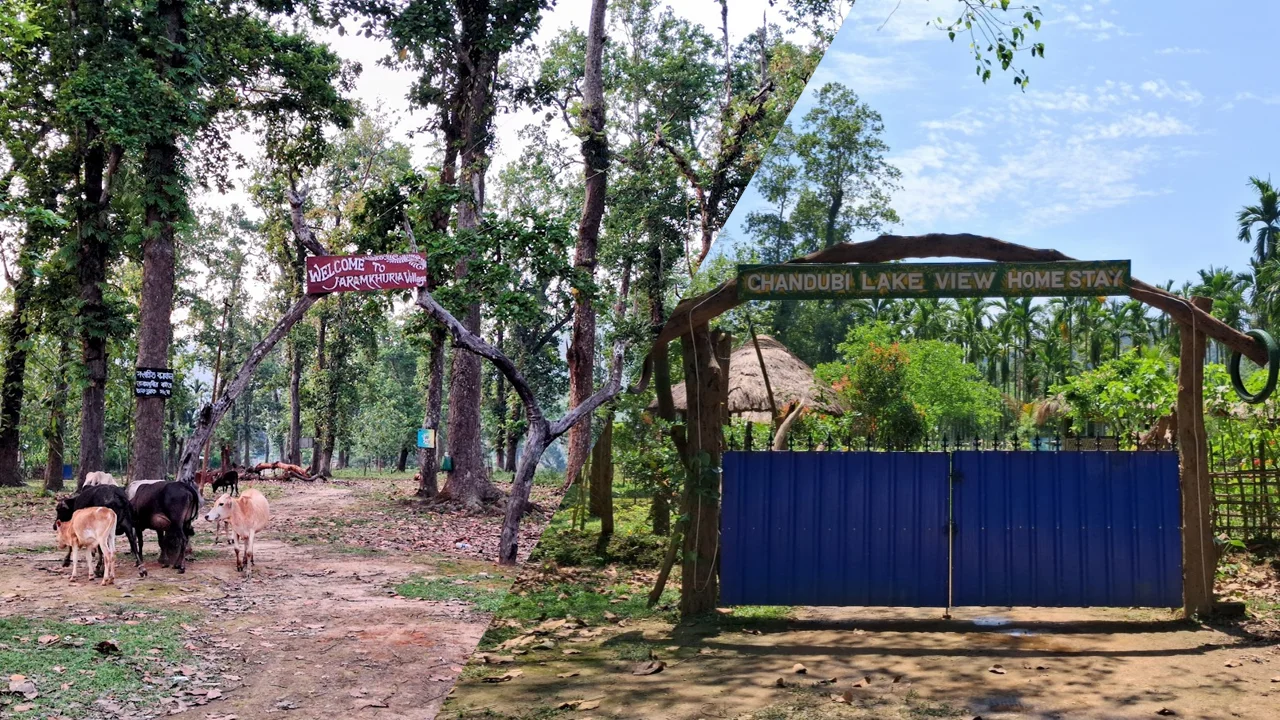
When we reached the gate, we stopped and honked. No call button, no security check. A staff member walked over, smiled, and swung the gate open with a simple “Aaiye.” That one word, Hindi for come, set the entire tone.
No reception counter. No formalities-heavy welcome speech. Just a gentle gesture pointing toward the parking under the shade of big teak trees, and a quiet sense that we’d already arrived somewhere peaceful.
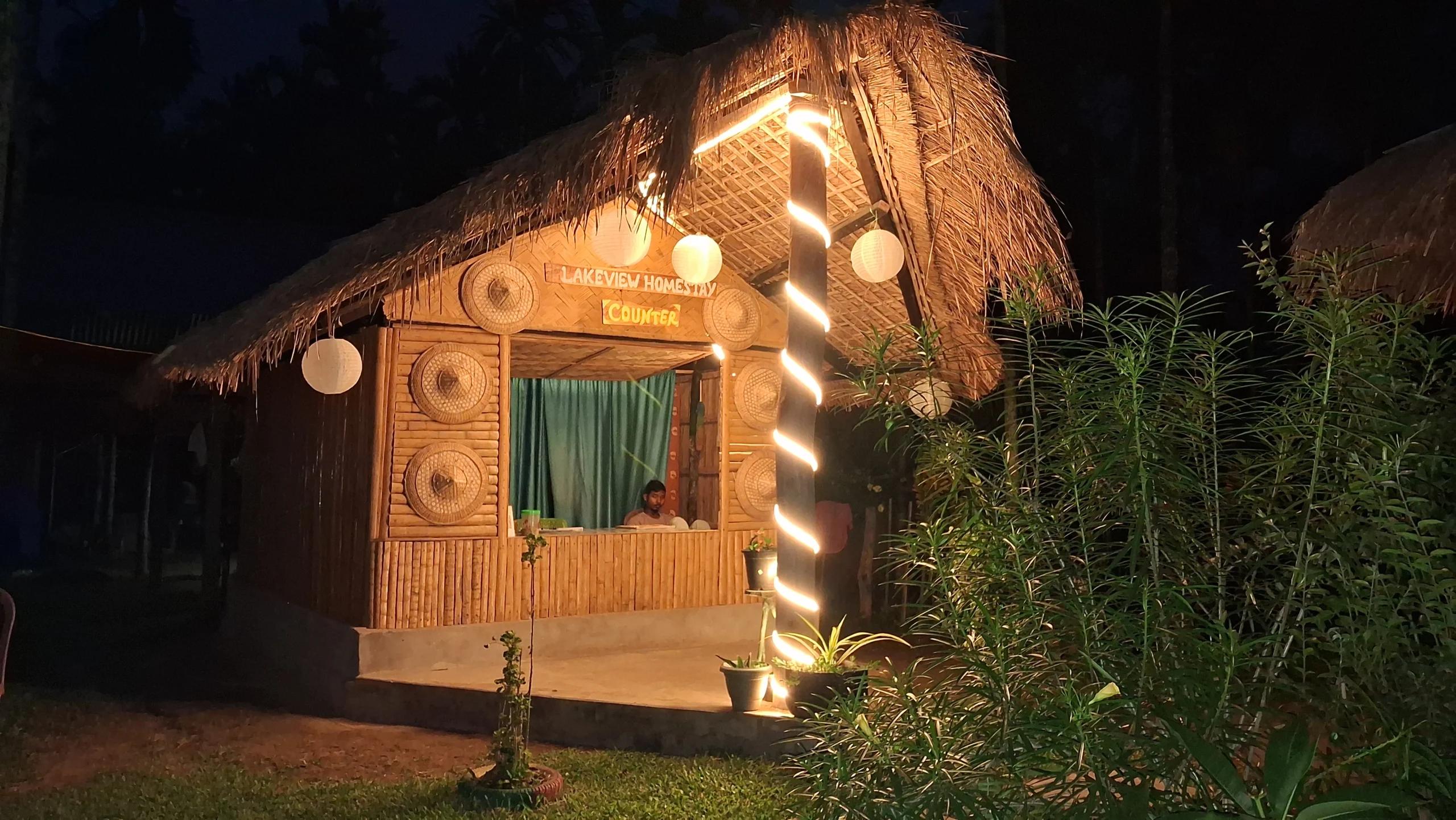
After a quick registration under the counter’s dim lights, another staff member led us to our cottage. The feeling was clear from that first moment: this is organised hospitality. Yes, printed menus, nameplates, a dedicated kitchen. But, it still breathes like a warm homely place.
The Property: Where Every Name Has a Bird
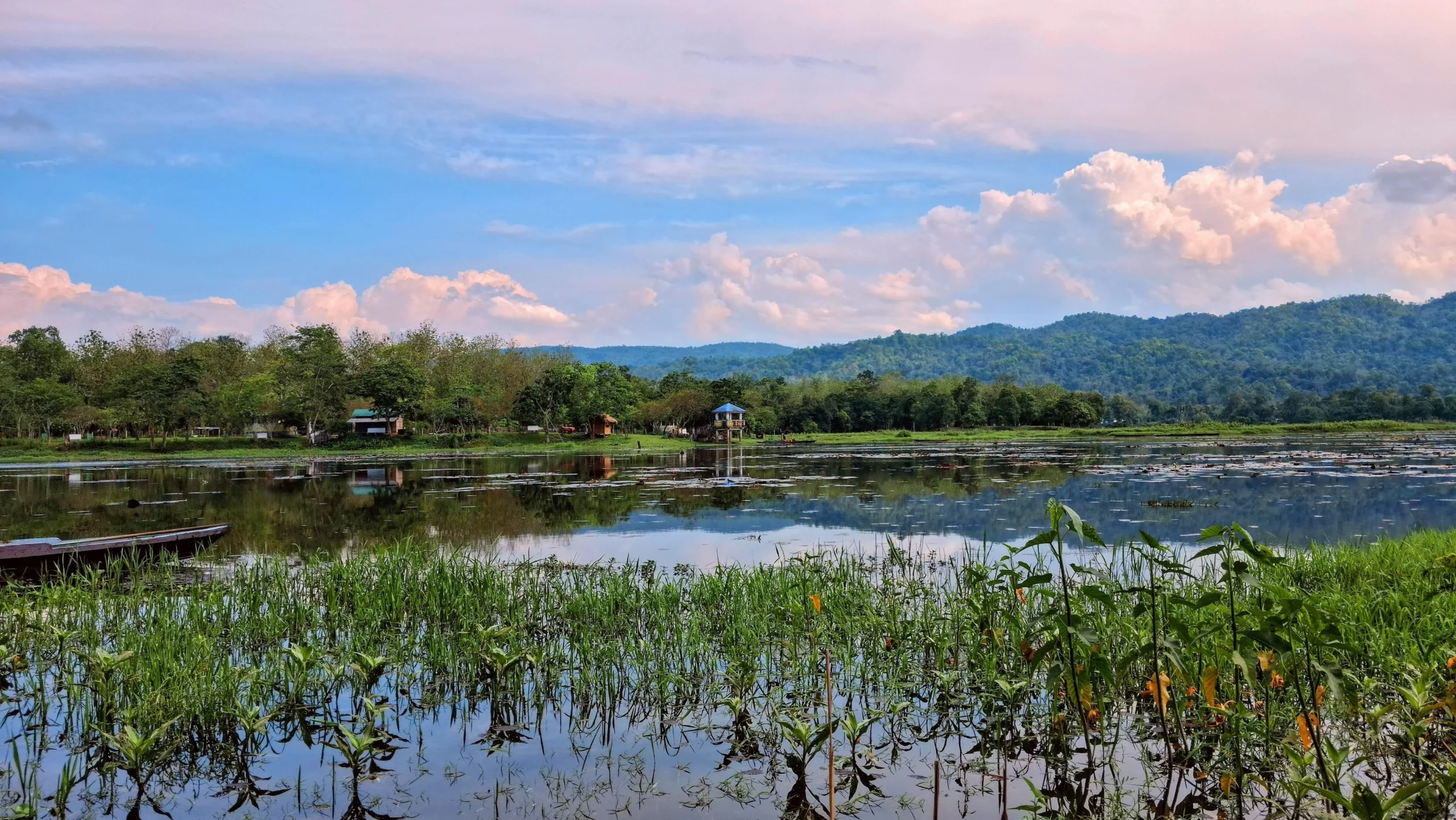
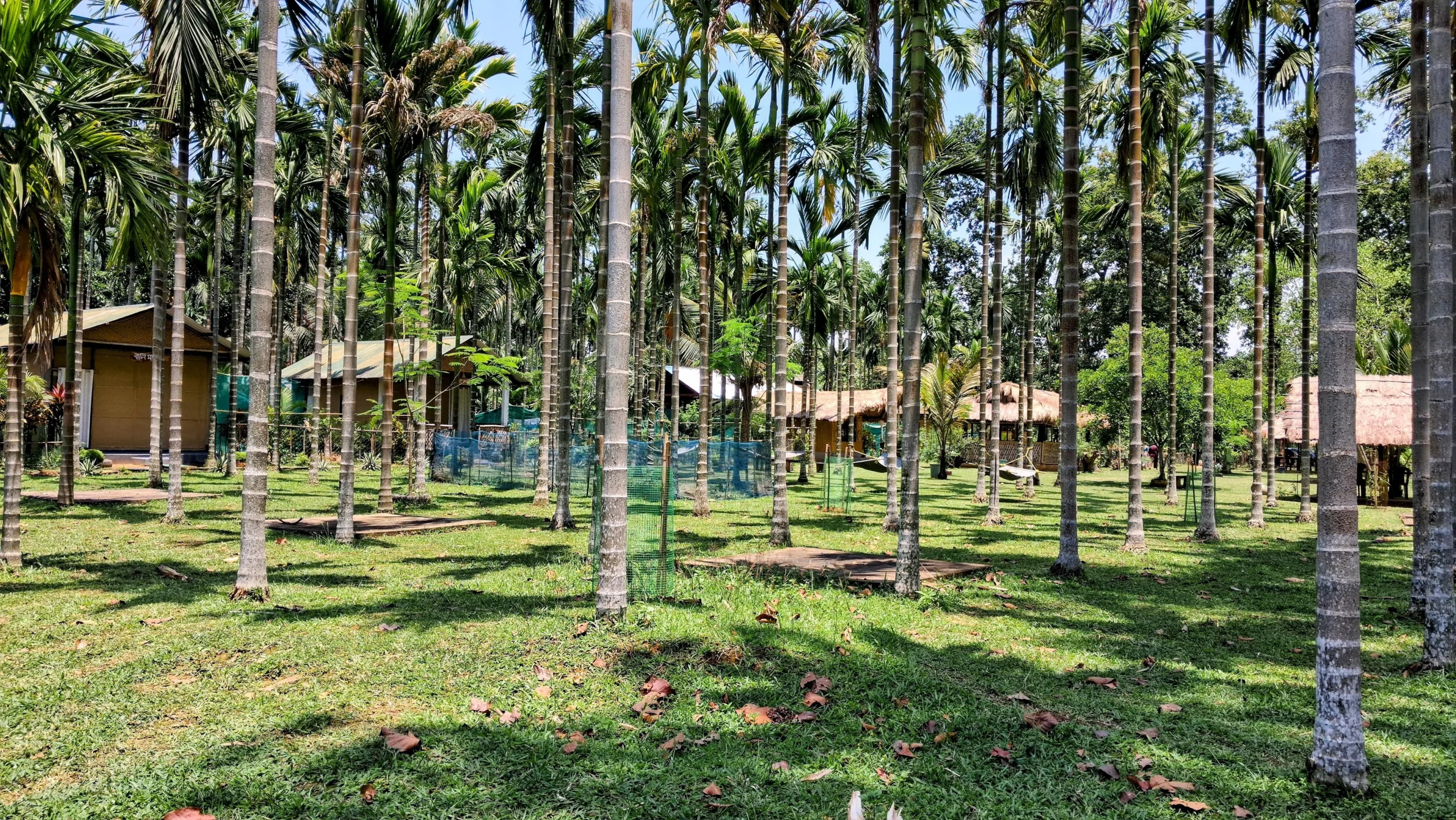
Chandubi Lake View Homestay sits inside a fenced compound right on the lake’s edge, facing the water. Once you step in, you realise everything has been built with quiet intention.
There are three cottages and one chang ghar (a traditional Assamese stilt house). Their names aren’t random:
- Dahi Katra (Oriental Magpie-Robin)
- Bali Mahi (Wagtail)
- Neel Kantha (Blue-throated Barbet)
- Bulbuli (Red-vented Bulbul) – it’s the Chang Ghar
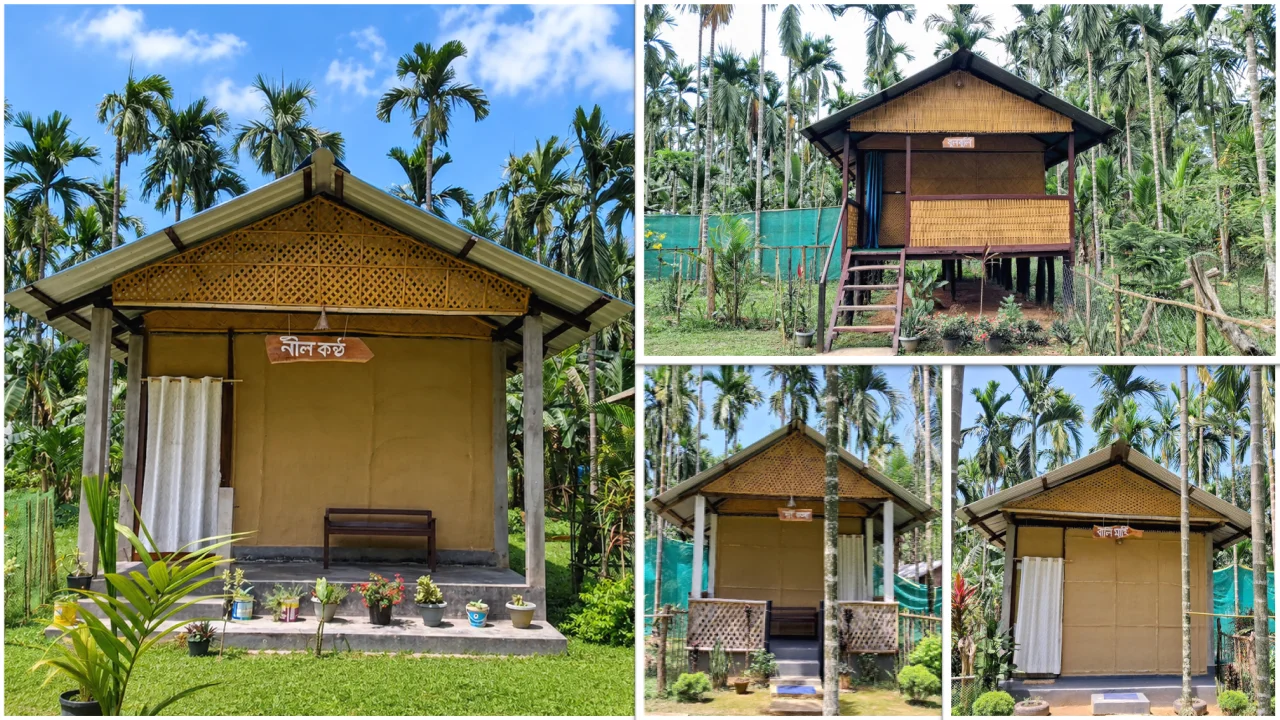
When you notice the bird theme, you start hearing birds everywhere. The names become a lens. The morning later confirms why.
The rest of the property spreads out naturally around these rooms: a large dining hut with smaller private tables, swings, canvas hammocks, monkey bars for children, little sitting sheds tucked under trees, and plants growing inside recycled tyres as fencing. It’s curated, yes, but not artificial. Someone with a gardener’s heart planned these corners, not just a resort designer.
It’s not a homestay where you live in a family’s spare room. The guest area is fully dedicated. The kitchen and counter are separate from the owners’ living quarters. This is a nature retreat that happens to be run by a family, not the other way around.
The Room: Close to Nature, Not Battling It
Inside the cottage, everything is exactly as you need it. Nothing excessive, nothing missing.
The mattress is medium-firm, pillows properly soft, the blanket thick enough for a lake night that drops a few degrees. A latch and a detachable lock on the door. Multiple charging points, and both inverter and generator backup mean you won’t suddenly wake up without a fan.
The bathroom is western-style, immaculately clean, with towels, soap, and toilet paper provided. Hot water? There’s no geyser, but a bucket of steaming water arrives quickly if you ask. That little detail, they didn’t install sleek taps but they’ll happily bring you a bucket, speaks volumes about the kind of place this is.
And then, the insect reality. Yes, mosquitoes exist. It’s a forest-fringed lake, after all. But if you keep the cottage door closed, they don’t come inside. Repellents are provided anyway. Outside at dusk you’ll meet a few, though fewer than expected. Sitting slightly away from dark corners makes it perfectly comfortable. This balance matters: you’re close to nature, not wrestling with it.
Evening at the Lake: When the Day Begins to Reset
By late afternoon, the homestay undergoes a quiet transformation.
The bird calls grow slower, softer. Golden light filters through the tall teak trees. And here you notice something many visitors don’t realise in advance: the sun sets behind the forest, not directly over the lake from this side. It’s a gentler golden hour, less dramatic than a coastal sunset, but layered and calm.
Outside the fence, cattle gather and rest after grazing, belonging to nearby homes. They’ll soon wander back to their sheds. A few last boats return, passengers’ silhouettes small against the shimmering water.
We took our own short boat ride around 5:30 PM.
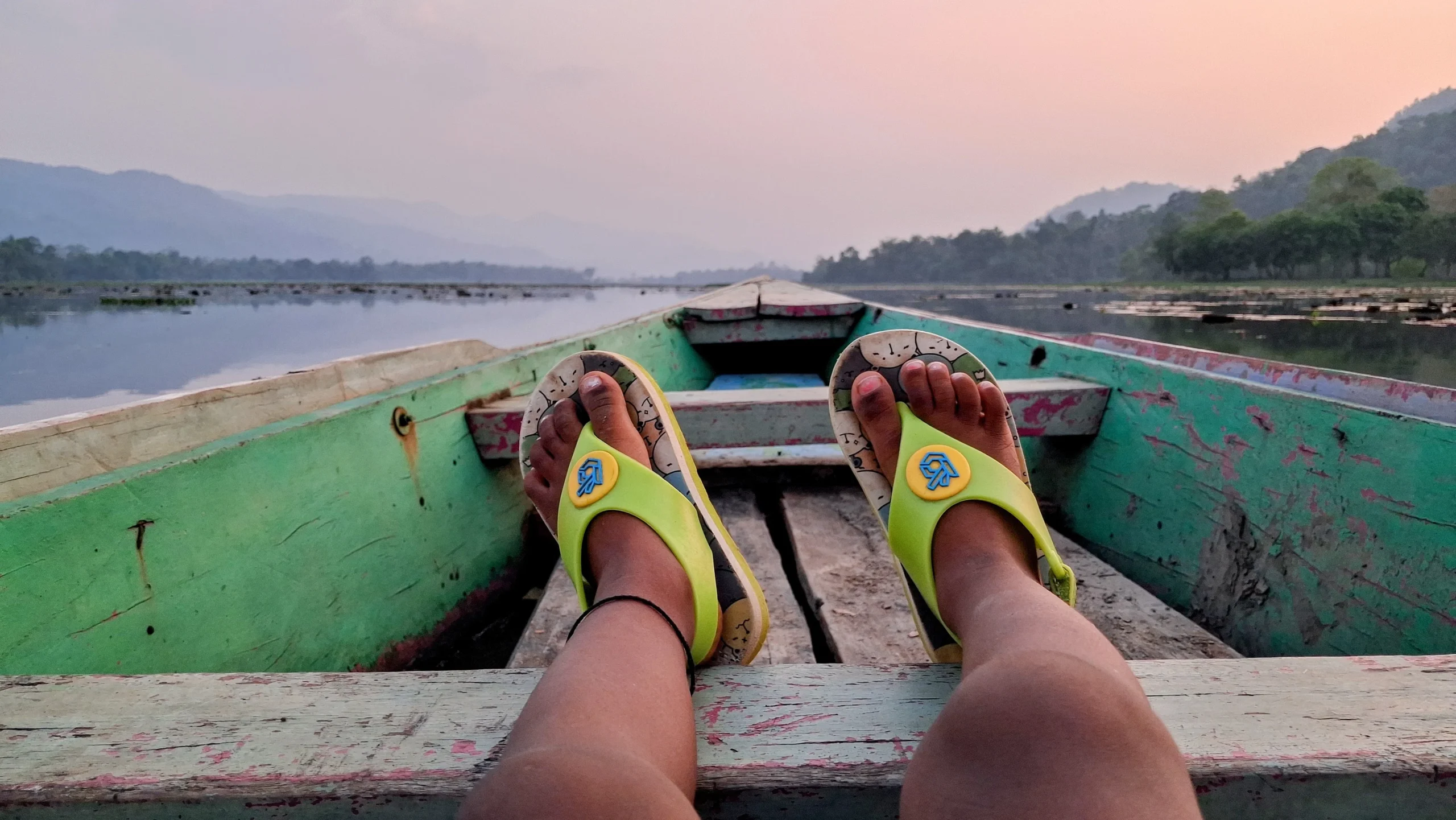
Sunset From the Middle of the Lake
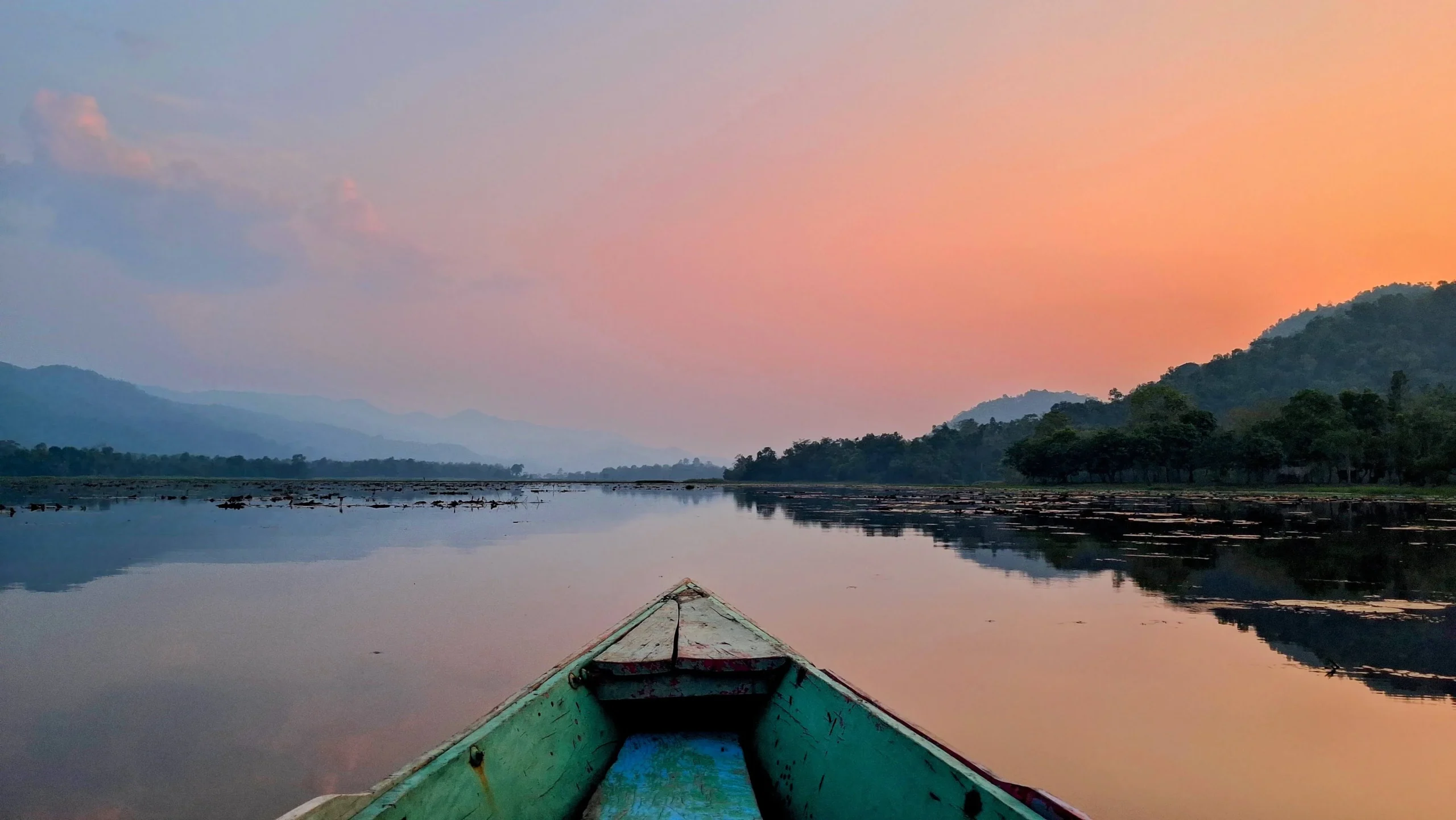
From the shore, sunset is calm but partly hidden. From the middle of the lake, it is emotional.
Out there, surrounded by forested hills and a vast, quiet sky, the water turns first gold, then bronze, then ink. The brightness slowly drains away, and in that transition, something deeper rises. A kind of invisible wave of solitude locked within the lake.
It felt like a reset.
The day’s deadlines, the social noise, the endless chase, all of it dissolved quietly with the light. The lake seemed to say: there is a whole, beautiful world beyond all that. The sunset here doesn’t just end the day. It gently removes the illusions of happiness we carry and replaces them with a stillness you’d almost forgotten existed.
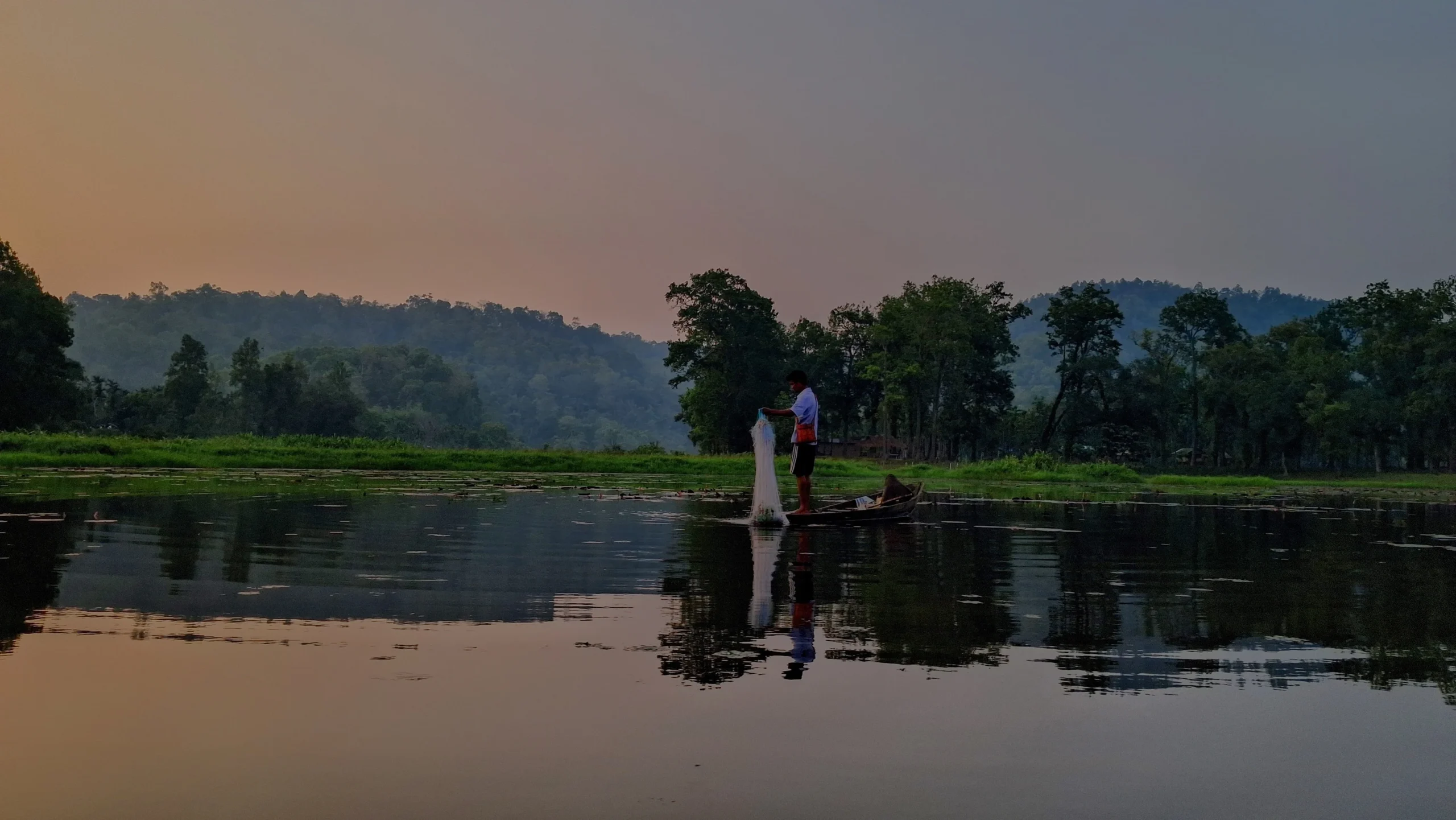
And yet, the lake was not empty of life. As the last colour left the sky, a fisherman was still out on the water, spreading his net into the gathering darkness, quietly continuing the work that belongs to this place.
By the time we returned to the homestay shore, the property lights had come on. Children were playing in the open area. The night wasn’t threatening — it was inviting.
Dinner: The Soul of Assamese Food, Revealed
Dinner ordering at Chandubi Lake Homestay works on trust and timing. No fixed window. Just give your order at least an hour before you want to eat. The kitchen normally winds down around 10:30 PM, but they’ll stay open later if you let them know in advance. We ate in the big dining hut, which felt like the perfect choice for the evening: open-sided, lit softly, the lake just a dark presence beyond the trees.
We ordered the veg thali with a side of fish fry.
And this is where the evening truly became memorable.
The veg thali arrived as an impressive spread of traditional Assamese vegetables, the kind that rarely appear in restaurant menus. Two dishes stunned us:
Ol Kochu Shaak (elephant foot yam leaves).
Most people know the yam tuber. The leaves are far rarer; they can irritate the throat if prepared incorrectly. The hosts explained their traditional technique with a quiet smile. It was delicious: silky, lightly spiced, zero discomfort.
Kol Ful (banana flower).
Another deeply authentic touch that instantly signals home-style Assamese cooking, not a tourist kitchen.
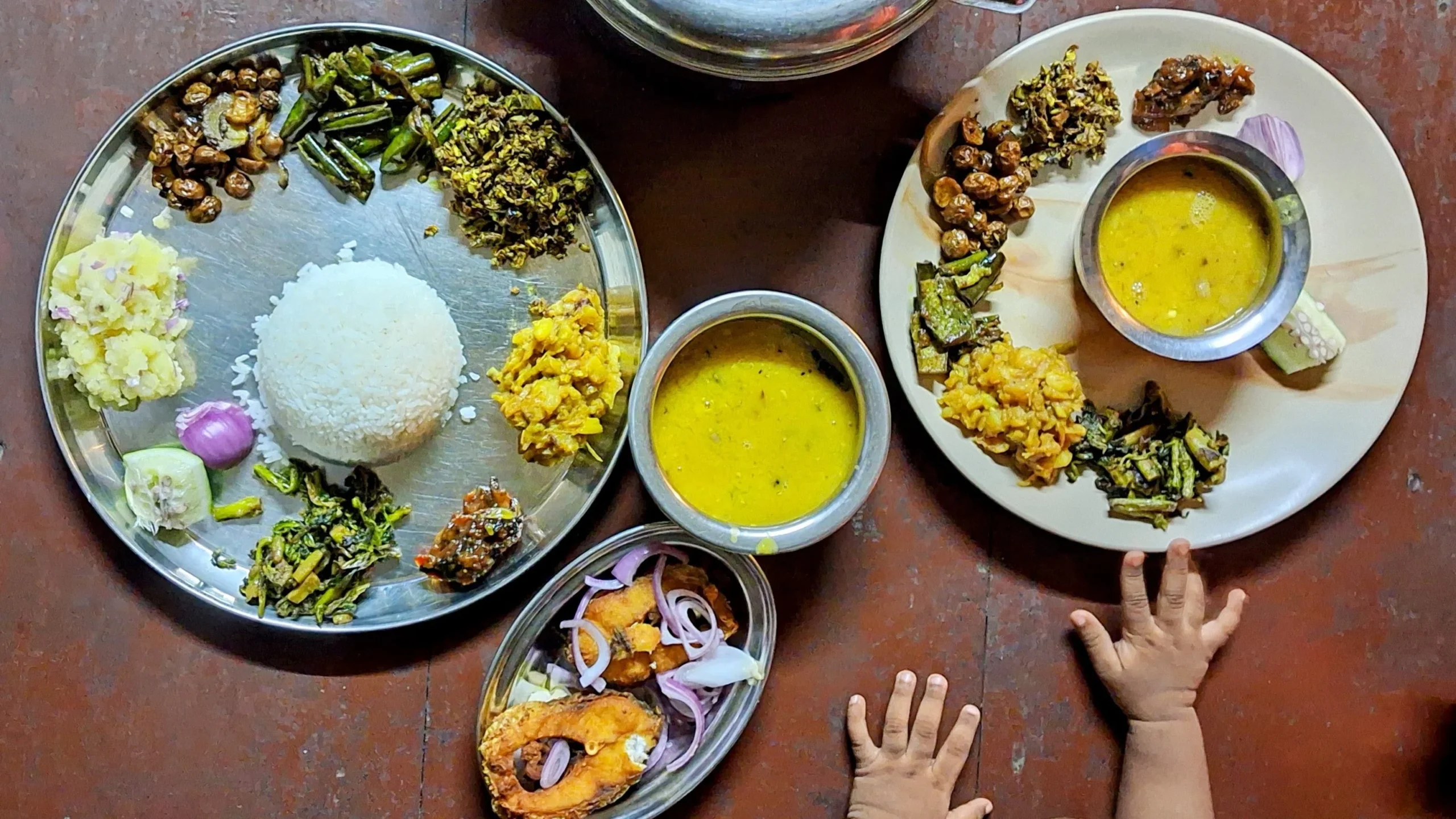
Together, these dishes said something important: the kitchen here knows its roots. If you’re searching for authentic Assamese food near Chandubi Lake, this kitchen alone is a strong reason to stay overnight.
After that meal, our recommendation solidified into a rule: always start with the veg thali, then add local meat or fish dishes. That combination gives the truest, most layered Assamese food experience.
Throughout our visits, we also tasted roasted chicken, small fish steamed in banana leaf (patot dia), and local chicken thali. Portion sizes are generous: a chicken plate contains about 10 pieces, a fish plate easily serves two to three people. The menu is printed, unusually detailed, with everything from simple veg thali (₹200) to duck curry with kumara (₹430).
Night at Chandubi: Pure Darkness, Pure Silence
After dinner, beyond the homestay’s small cluster of lights, the world disappears.
Not city dark. Real dark.
On a moonlit night, the hosts say you can walk comfortably outside. On our visit, the darkness felt deep and endless. The soundtrack shifted: insects humming, frogs calling, occasional night birds, and once, somewhere deep in the distance, a fox.
Walking back to the cottage felt safe, even enjoyable. The night wasn’t empty; it was alive, just quieter.
Inside the room, sleep came in a single, uninterrupted wave. Deep, dreamless, heavy with lake air. No disturbances. Just quiet.
The Morning Symphony: Birds, Lilies, and a Toddler at the Door
If you want to see the first light around Chandubi, you must stay awake all night. The birds wake up before the sun. They are the real guardians of the lake, surveying the world before any human steps outside.
When I opened the cottage door, I genuinely thought an air-force drill was in progress overhead.
Roar. Whine. Whistle. Buzz-saw. Whoosh. Spool-up. Sonic boom.
Formation flying. A wide variety of aircraft, except that every one of them was a bird.
Barbets. Several types of sunbirds. Doves. Bulbuls. Kingfishers. Bee-eaters. An Indochinese roller. Small parakeets and large ones. And other jets and helicopters I couldn’t name. An entire orchestra performing a dawn overture I’d never heard before with such intensity.
The morning chorus at Chandubi Lake was so powerful it felt like you could reach up and touch the sound.
When we walked down to the shore, the lake had transformed overnight. Water lilies had bloomed across vast stretches of the lake, turning the quiet morning water into a canvas of rosy-pink and magenta hues. Fishermen were already out on their boats, quietly collecting nets as the first real light stretched across the hills.
And then, back at the cottage, our toddler pushed open the door herself, the door she couldn’t open the evening before. She stood there, framed by morning light, looking at this vast, green, bird-filled world, and she smiled.
Her first Chandubi Lake morning.
Mine too, in a way.
Boating From This Side: Yes, You Can
Before our first visit to Chandubi Lake View Homestay, we assumed boating was only possible from the Chandubi boating association on the opposite shore. Many travellers think the same.
Not true.
There’s a small board near the shore at the homestay with phone numbers. You call, and a boat arrives from the other side. Rate: ₹100 per person for 10–15 minutes. You can negotiate longer rides for a higher charge. The boatman knows the lake intimately, and if you go at dusk, the experience is entirely different from a midday tourist loop.
Practical Things You Should Know Before Booking
Because small details make or break a rural stay, here’s everything in one place:
Booking Your Stay at Chandubi Lake Homestay
- WhatsApp or phone call (numbers on their website)
- Advance payment recommended
- Walk-in possible, but risky on weekends
- Check-in: 2–5 PM; Check-out: 11 AM (flexible if communicated early)
Tariff
- Cottage: ₹2500/night
- Chang Ghar: ₹4500/night
- Tent: ₹800/night
- Food as ordered; veg thali from ₹200, local fish thali ₹320, duck curry ₹430, etc.
Connectivity around Chandubi Lake
- Jio: weak, but UPI and WhatsApp possible with patience
- Airtel: better (call and browsing)
Power & Water at Chandubi Lake Homestay
- Inverter + generator backup
- Hot water: bucket on request (no geyser)
- Toiletries provided
Mosquitoes
- Present outdoors at dusk; minimal inside if door kept closed; repellent provided
Road & Safety
- No street lights at night; safe but watch for animals/snakes if walking
Best Season (host’s recommendation): Winter
Our Honest Verdict
Chandubi Lake View Homestay sits in a rare, beautiful middle ground.
It’s not a raw, untouched family home where you feel like you’ve walked into someone’s private kitchen (That’s a different kind of magic! If you’ve read our Nasiriba homestay experience, you know the feeling). And it’s not a commercial resort with manicured lawns and buffet tables.
It’s something in between: organised hospitality with a human heart. A place where you get a printed menu but also a grandmother’s recipe for yam leaves. A place with nameplates on rooms and bird names that echo the forest. A place where the lake’s beauty is framed by thoughtful design, not casual accident.
This is for families who want their kids to run free. For couples who need a slow, screen-free recharge. For birders who know that dawn at a lake is the best show on earth. And for anyone who’s curious about what happens when you stay, not just visit.
How does it compare to the more homely, spontaneous magic of Nasiriba? That question deserves its own honest answer. And it’s coming next.
For now, here’s what we know: we’ll be back. Probably for two more days this time. My wife has already decided.